EveryEvent Amsterdam

Sfoglia tutti i Events

Find every event in Amsterdam

events

Concerts & Live Music
Festivals
Sports & Recreation
Food & Drink
Arts & Culture
Community
Family & Kids
Nightlife
Comedy
Theater
Destinazioni popolari
BaliSedonaLos AngelesCosta RicaNew YorkSan FranciscoAustinMiamiJoshua TreeTulum
Vedi tutte le categorieVedi tutte le destinazioni

Esplora tutte le funzionalità

Strumenti potenti per far crescere i tuoi eventi

Funzionalità della piattaforma

Prezzi dinamici intelligenti
Categorie di biglietti
Posti assegnati
Recupero carrelli abbandonati
Recupero visitatori
Donazioni e prezzi variabili
Sistema affiliati
Scanner biglietti
Codici sconto
Domande personalizzate
Condivisione biglietti
Upsell e componenti aggiuntivi
Analisi e report
Sequenze email
Lista d'attesa / Notifica / Promemoria
Esplora
Discovery HubArtists & PerformersVenuesKnowledge Base
Vedi tutte le funzionalitàChi siamo
PrezziBlog
Language
Saved events
Sfoglia tutti gli eventi

events

Concerts & Live MusicFestivalsSports & RecreationFood & DrinkArts & CultureCommunityFamily & KidsNightlife

Destinazioni popolari

BaliSedonaLos AngelesCosta RicaNew YorkSan Francisco

Esplora

Discovery HubArtists & PerformersVenuesKnowledge Base

Funzionalità della piattaforma

Prezzi dinamici intelligentiCategorie di bigliettiPosti assegnatiRecupero carrelli abbandonatiRecupero visitatoriDonazioni e prezzi variabiliSistema affiliatiScanner bigliettiCodici scontoDomande personalizzateCondivisione bigliettiUpsell e componenti aggiuntiviAnalisi e reportSequenze emailLista d'attesa / Notifica / Promemoria
Vedi tutte le funzionalitàChi siamo
PrezziBlog
AccediRegistratiOrganizzatori di eventi
  • Browse All Events
  • Concerts & Live Music
  • Festivals
  • Sports & Recreation
  • Food & Drink
  • Arts & Culture
  • Community
  • Family & Kids
  • Nightlife
  • Tutte le categorie →
  • All Destinations →
  • For Promoters
  • For Artists
  • For Venues
  • For Festivals
  • For Event Spaces
  • For Nonprofits
  • For Bloggers
  • For Speakers
  • Brand Ambassador
  • Case Studies
  • Rete di 350K+ acquirenti
  • Recupero carrelli abbandonati
  • Prezzi dinamici intelligenti
  • Categorie di biglietti
  • Eventi ricorrenti
  • Posti assegnati
  • Sistema affiliati
  • Lista d'attesa / Notifica
  • Scanner biglietti
  • Widget incorporabile
  • Distribuzione eventi
  • Centro messaggi
  • Integrazioni
  • Report
  • Tutte le funzionalità →
  • Chi siamo
  • L’ecosistema
  • Blog
  • Glossario
  • Ispirazione
  • Centro assistenza
  • Contatti
  • Documentazione API
  • Risorse del brand
  • Carriere
  • Stampa
  • Termini di servizio
  • Informativa sulla privacy

Events

  • Browse All Events
  • Concerts & Live Music
  • Festivals
  • Sports & Recreation
  • Food & Drink
  • Arts & Culture
  • Community
  • Family & Kids
  • Nightlife
  • Tutte le categorie →

Getaways

  • All Destinations →

For Organizers

  • For Promoters
  • For Artists
  • For Venues
  • For Festivals
  • For Event Spaces
  • For Nonprofits
  • For Bloggers
  • For Speakers
  • Brand Ambassador
  • Case Studies

Funzionalità

  • Rete di 350K+ acquirenti
  • Recupero carrelli abbandonati
  • Prezzi dinamici intelligenti
  • Categorie di biglietti
  • Eventi ricorrenti
  • Posti assegnati
  • Sistema affiliati
  • Lista d'attesa / Notifica
  • Scanner biglietti
  • Widget incorporabile
  • Distribuzione eventi
  • Centro messaggi
  • Integrazioni
  • Report
  • Tutte le funzionalità →

Azienda

  • Chi siamo
  • L’ecosistema
  • Blog
  • Glossario
  • Ispirazione
  • Centro assistenza
  • Contatti
  • Documentazione API
  • Risorse del brand
  • Carriere
  • Stampa
  • Termini di servizio
  • Informativa sulla privacy
EveryEvent
© 2026 EveryEvent Amsterdam. Tutti i diritti riservati.
Inspiration

Death as Birth: Meetingthe Veil Between Worlds

Ram Dass
Ram Dass
Dec 3, 2021
6 min di lettura

Ram Dass's "And Now He Has Wings" is a musical exploration of death reframed as spiritual birth and wings into another realm. Inspired by the loss of his newborn son, the work invites listeners to feel the proximity of the veil between the spirit world and physical world—not as a barrier to mourn, but as a permeable threshold where loss and transformation are two sides of the same sacred passage.

Lettura · 6 sezioni

Why Frame Death as a Birth Rather Than an Ending?

In the spiritual traditions Ram Dass draws from—particularly Hindu and Buddhist philosophy—death is not the cessation of being but a transition. The image of "wings" is central here: it suggests emergence, mobility, and freedom into a realm beyond the constraints of form. This is not metaphor as escape fantasy, but as a direct perception that consciousness continues, and that the person who dies is not destroyed but liberated into a different dimension of existence.

The musical composition "And Now He Has Wings" works precisely because it does not explain this philosophically—it creates a felt sense of it. By using sound, tone, and rhythm to evoke proximity to "the veil that separates the spirit world and the physical world," the listener does not merely learn the idea that death is a birth; they sense it in the body, in the chest, in the space between heartbeats.

What Does It Mean to Feel Close to the Veil?

The veil, in mystical language, is not opaque or impenetrable. It is gossamer. It is the membrane where one realm touches another—where the living can briefly sense the presence of those who have passed, where grief transforms into recognition, where farewell becomes hello-again in a new form.

Ram Dass's music does this by holding two states simultaneously: the palpable reality of loss—the absence of a physical body, the interruption of plans, the ache of not holding someone—and the equally palpable reality of presence-in-another-form. The listener is invited not to choose between these but to inhabit the space where both are true. This is not denial of grief. It is the deepening of grief into something larger, where tears are no less real but become a conversation rather than a one-way goodbye.

How Does Personal Loss Shape Spiritual Teaching?

The composition was inspired by the passing of Ram Dass's newborn son. This is not incidental context; it is the forge in which this particular spiritual insight was made real. Abstract teachings about reincarnation, about the impermanence of form, about the eternal nature of the soul—these gain weight and tenderness when spoken from the place of a father who has held that teaching not as philosophy but as the only way to survive the loss of his child.

This is a crucial distinction in spiritual practice: the teacher who speaks from having merely studied the teaching is different from the teacher who speaks from having been broken by life and reconstructed by the teaching. Ram Dass belongs to the latter category. His work here is not offering comfort by saying "your child is in a better place." It is saying: "I know the geometry of that loss, and I know that the geography of consciousness is larger than we are taught to believe. Come close to the veil with me and feel it yourself."

What Is the Relationship Between Spirit and Physical Form?

Western culture typically treats spirit and matter as separate domains. The physical world is "real"; the spiritual world is "metaphorical" or "internal." But in the cosmology Ram Dass is working with—drawn from Vedanta, Kashmir Shaivism, and Tibetan Buddhism—spirit and matter are not two separate things. They are two frequencies of one consciousness. The veil is not a wall; it is a difference in vibration.

When someone dies, from this perspective, they do not vanish. They change frequency. The body—that dense, physical, familiar form—dissolves. But the continuity of consciousness, the essence that animated that form, continues. The metaphor of "wings" captures this: the being is no longer bound to the heaviness of flesh; it has lightness, mobility, capacity to move in ways that physical bodies cannot.

This reframing does not negate the realness of physical love and presence. It expands the possibility of what those continue to be. A person with "wings" is not less present; they are present differently.

How Can Music Express What Words Cannot?

Words about death tend to either poeticize it (making it beautiful and therefore somehow less true) or medicalize it (making it a process to manage and move through). Music does something else: it bypasses the need to choose between those framings and speaks directly to the nervous system, to the places in the body where knowing and feeling are not separate.

A musical painting, as Ram Dass calls this work, is not illustrative the way a song with lyrics might be. It is evocative. It creates a container—a temporal space—where the listener can hold contradiction. Where grief and peace can exist without resolving into one or the other. Where the presence of absence can be felt as a kind of presence. This is the work that music does better than language can.

Where to Go From Here

If you find yourself drawn to this work—whether because you have experienced the loss of a beloved person, or because you are curious about the teachings on consciousness that inform it—the invitation is to listen not as a spectator but as a practitioner. The music is designed to be sat with, to be returned to. It is not trying to convince you of a belief. It is creating the conditions for direct perception.

From there, you might explore the primary texts in the traditions Ram Dass draws from: the Bhagavad Gita's teaching on the eternal nature of the soul, the Tibetan Book of the Dead's map of consciousness beyond death, the teachings on Maya—the veil of illusion—in Vedanta. Or you might simply sit with the music again, and notice what changes in your body and heart when you stop resisting the possibility that those who die do not disappear, but only become invisible to physical sight.

The veil is thinner than we think, and grief—true grief, fully felt—is one of the doorways to feeling it.
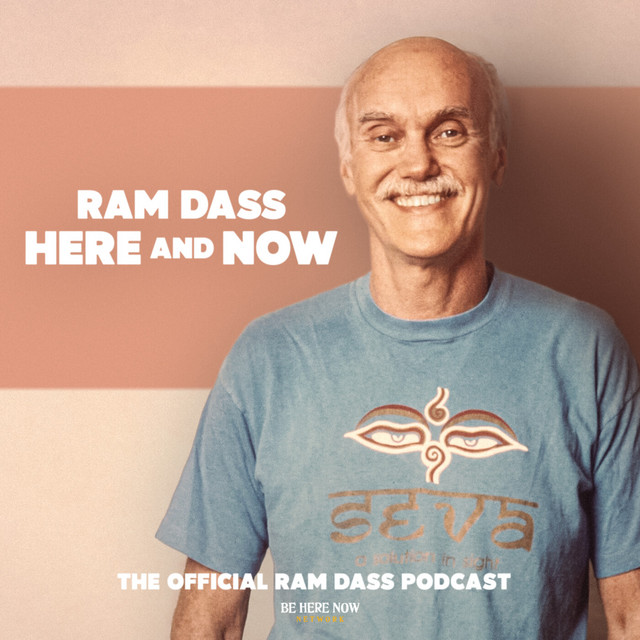
Ram Dass
AutoreRam Dass

American spiritual teacher, formerly Harvard psychology professor Richard Alpert. After meeting his guru Neem Karoli Baba (Maharaj-ji) in India in 1967, he returned as Ram Dass and…

Vedi il profiloSito web
Esplora i temi
Death-consciousnessGrief-transformationSpirit-realmLoss-beyond-formVeil-mystic

Hai domande?

Domande frequenti

In the traditions Ram Dass draws from, death is not an ending but a transition where consciousness continues in a different form or realm. The body dissolves, but the essence of the person—their spirit or soul—moves into another dimension of existence, liberated from physical constraints. This reframes grief not as permanent loss but as a threshold experience where one realm ends and another begins.
The veil is not opaque but gossamer-thin, a permeable membrane where both realms touch. Proximity to it can be felt through deep meditation, grief fully held, and states of heightened awareness. Ram Dass's music is designed to create the conditions for this felt sense—to evoke the space where loss and presence, absence and connection, coexist without resolving.
Music bypasses the intellect and speaks directly to the nervous system and body. It holds contradiction without forcing choice—allowing grief and peace to coexist, and making room for the presence of absence. Words tend to either poeticize or medicalize death; music creates a container where direct perception becomes possible.
In the spiritual cosmology Ram Dass works with, spirit and matter are not two separate things but two frequencies of the same consciousness. The veil between them is a difference in vibration, not a wall. When someone dies, they do not vanish; they change frequency and become invisible to physical sight but remain present in another form.
A teacher who has lived through loss and found spiritual understanding in it speaks with a different authority than one who only studies teachings conceptually. Ram Dass's inspiration from his newborn son's passing transforms his teaching on death from abstract philosophy into embodied wisdom—an invitation to feel the geometry of loss and the larger geography of consciousness.
True grief that is fully felt does not disappear through spiritual understanding; instead, it becomes a doorway to perceiving larger truths about consciousness and continuity. Holding both grief (the realness of absence) and peace (the knowledge of continuation) is not contradiction but wholeness—the natural state of a being close to the veil.

Continua a leggere

More from Ram

Vedi Tutto
Stories as Medicine: How Compassion Heals Division and Builds Connection
Featured

Stories as Medicine: How Compassion Heals Division and Builds Connection

In this profound exploration of human connection, renowned spiritual teacher Jack Kornfield reveals how stories serve as medicine for our di…

1 min read
Walking the Tightrope: How to Serve Both Heaven and Earth Without Losing Your Balance
Featured

Walking the Tightrope: How to Serve Both Heaven and Earth Without Losing Your Balance

Ram Dass reveals the spiritual challenge of our time: staying connected to divine consciousness while remaining present to human suffering a…

1 min read
What Really Happens When You Die: Beyond the Body
Featured

What Really Happens When You Die: Beyond the Body

Consciousness survives death, but the personal self does not. Eckhart Tolle explains what actually persists and how recognizing your true na…

1 min read
Brain as Receiver: Consciousness Beyond the Mind
Featured

Brain as Receiver: Consciousness Beyond the Mind

The brain does not create consciousness but acts as a receiver of it. When the receiver ceases, the signal persists independently.…

1 min read

Continua a esplorare

Continua il tuo viaggio

Altra saggezza e altri incontri da tutta la directory BrightStar.

Altri articoli

Sfoglia l’intera raccolta di insegnamenti, interviste e guide.

Torna a tutti gli articoli →

Insegnanti e artisti

Esplora i lignaggi, i musicisti e le guide del mondo consapevole.

Esplora gli artisti →

Trova un evento

Kirtan, ritiri, sound bath, breathwork, festival: in arrivo presto.

Sfoglia gli eventi →