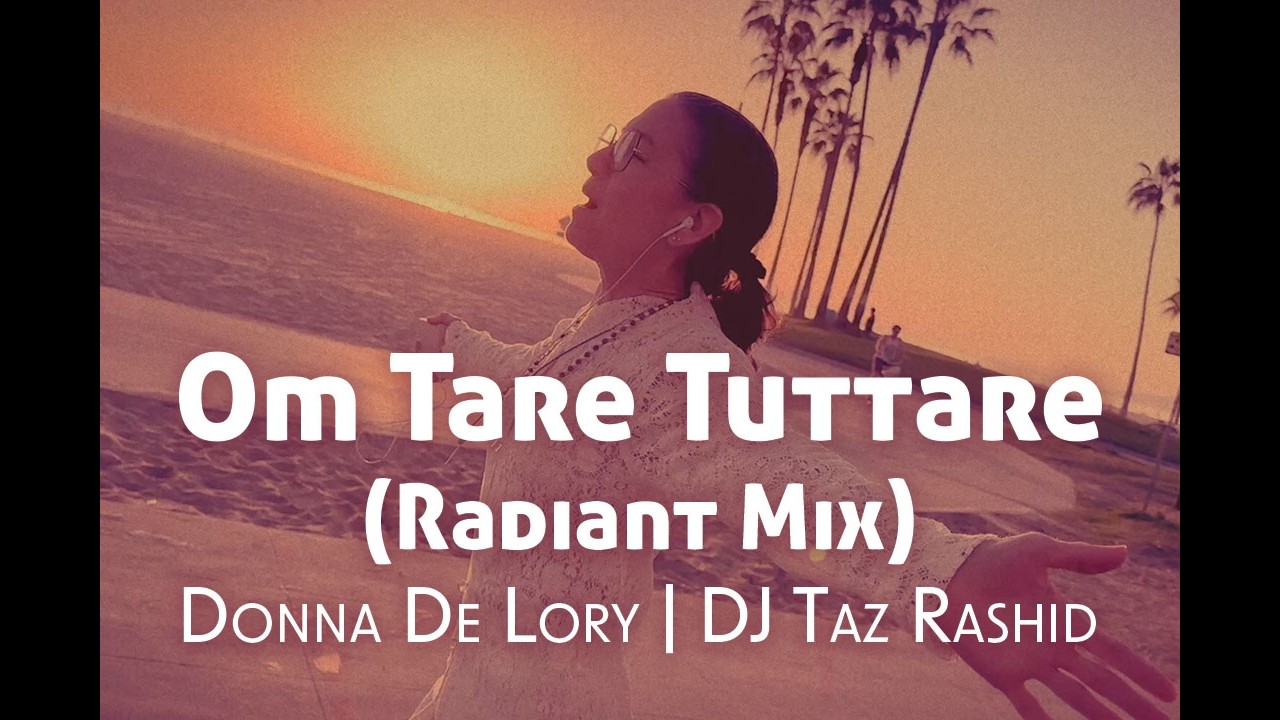
Donna De Lory performs "My Sweet Lord" as a devotional kirtan piece from her album The Unchanging. The video showcases the traditional practice of call-and-response chanting—a cornerstone of bhakti yoga—as a method for deepening spiritual connection and cultivating direct remembrance of the divine. This performance demonstrates how contemporary kirtan artists use repetition, melody, and sincere devotion to facilitate meditative states and inner transformation.
What Is Kirtan and How Does It Function as Spiritual Practice?
Kirtan is an ancient Sanskrit word meaning "to sing the names" or "praise," and it represents one of the most accessible and widely practiced forms of bhakti yoga—the yoga of devotion. Unlike more esoteric meditation techniques that require years of study or special conditions, kirtan operates on the principle that the repetition of sacred names, mantras, and divine qualities naturally purifies consciousness and opens the heart to spiritual experience.
In traditional Hindu and yogic contexts, the practice is grounded in the belief that sound itself carries sacred vibration. When a name for the divine is chanted repeatedly—whether sung as a solo meditation or in a group call-and-response—the practitioner's mind, body, and subtle energy are said to attune to higher frequencies. The melody and rhythm work together to anchor awareness in the present moment, creating a state of absorption (samadhi) where the individual consciousness naturally merges with the object of devotion.
Donna De Lory's work exemplifies how kirtan bridges ancient wisdom and contemporary spiritual expression. Her album The Unchanging positions her as a modern keeper of this tradition, bringing the practice into settings and formats accessible to Western audiences while honoring the essential transformative principles underlying the practice.
Why Does "My Sweet Lord" Function as a Devotional Anchor?
The phrase "My Sweet Lord" operates as both a literal invocation and a psychological device. By addressing the divine in intimate, personal language—not as a distant cosmic force but as a "sweet" presence—the chanter creates a relational container for their longing and devotion. This intimacy is crucial. Kirtan is not abstract intellectualization; it is an emotional, heart-centered practice that acknowledges the deepest human yearning for union, recognition, and love.
The repetition of the phrase works on multiple levels simultaneously. On the surface level, it serves as a mnemonic device, occupying the thinking mind so thoroughly that habitual thought patterns quiet naturally. Deeper, the repetition is understood to inscribe the sacred name into the subtle channels (nadis) of the energy body, gradually transforming the practitioner's inner landscape. Most profoundly, many bhakti traditions teach that the divine name and the divine reality are non-dual—that speaking the name is already a form of communion.
By recording and sharing this practice, De Lory invites listeners into an expanded relationship with the music. It becomes not merely entertainment or cultural artifact, but an accessible gateway to personal spiritual experience. The album format allows for repeated listening—itself a form of deepening practice—rather than a one-time event confined to a concert hall.
How Do Melody and Rhythm Support Meditative States?
The musical elements of kirtan are never incidental to the spiritual work. Melody serves several functions: it makes the chant memorable, it engages different regions of the brain than recitation alone, and it naturally induces rhythmic breathing patterns that calm the nervous system. When the mind is occupied with following a melody, the everyday "monkey mind" that typically dominates consciousness has less room to operate.
Rhythm operates similarly but more directly. A steady, consistent beat—whether maintained by a drum, the human voice, or instrumental accompaniment—synchronizes the practitioner's heartbeat and breath to the sacred pattern. This synchronization is not metaphorical; neuroscience has confirmed that musical rhythm directly influences heart rate variability, stress hormone levels, and brainwave states. A kirtan session conducted in the proper tempo and meter can genuinely induce alpha and theta brainwave states associated with relaxation, creativity, and non-ordinary consciousness.
De Lory's approach likely emphasizes accessibility without sacrificing depth. By making the music beautiful and engaging to listen to, she removes barriers that might prevent someone from approaching the practice. Yet the underlying structure—the sacred names, the devotional intention, the repetitive form—remains intact, ensuring that serious practitioners can still access the transformative dimensions of the work.
What Is the Role of the Album Format in Spiritual Practice?
In traditional settings, kirtan was a communal practice—groups gathered in temples, ashrams, or homes to sing together. The energy of multiple voices, the spontaneous call-and-response, and the shared intention created a field of devotion that supported individual transformation. The album format fundamentally changes the container while preserving the essential practice.
A recorded kirtan album allows for solitary practice, removing social barriers while maintaining the structural integrity of the form. Someone without access to a kirtan community can play The Unchanging during meditation, during mundane daily activities, or in moments of spiritual longing. Over repeated listening, the album becomes a trusted companion—what might be called a "spiritual object" in psychological terms. The listener's nervous system gradually entrains to De Lory's voice, melody, and rhythm.
Moreover, the album platform allows De Lory's practice to reach far beyond geographic limitations. Her interpretation of "My Sweet Lord" travels globally, seeding devotional practice in listeners who might never encounter kirtan otherwise. This democratization of access is particularly significant in Western spiritual contexts, where traditional kirtan communities remain relatively rare or geographically concentrated.
How Does Kirtan Address Modern Spiritual Needs?
Contemporary seekers often face specific challenges: fragmentation of attention, disconnection from embodied experience, and a hunger for practices that feel both ancient and immediately relevant. Kirtan addresses all three. The practice requires full presence—you cannot half-sing a chant and receive its benefits. It is irreducibly embodied; you feel it in your chest, throat, and breath. And it carries the authority of millennia while remaining perfectly suited to modern life.
Unlike meditation practices that can feel abstract or difficult for beginners, kirtan meets people where they are. If you can speak, you can participate. If you can listen, you can receive benefit. The emotional accessibility of devotional singing—particularly a phrase as poignant as "My Sweet Lord"—makes it psychologically safe for those new to spiritual practice. There is no exotic terminology to master, no special postures to learn, no risk of "doing it wrong."
Yet beneath this accessibility lies profound depth. A serious practitioner could work with "My Sweet Lord" for years, discovering new layers of meaning, subtlety, and spiritual intimacy. The simplicity is not simplistic; it is the simplicity of a diamond, which appears plain until light passes through it.
Where to Go From Here
If this exploration of kirtan and devotional song resonates, consider exploring Donna De Lory's full album The Unchanging, available through iTunes and Amazon. Begin a simple practice: choose a quiet space, play the recording of "My Sweet Lord," and listen without agenda. You might sing along, or simply sit and receive. Over time, as you return to the practice, notice what shifts in your awareness, your emotional openness, and your sense of connection to what you hold sacred. The practice itself will teach you what you need to know.