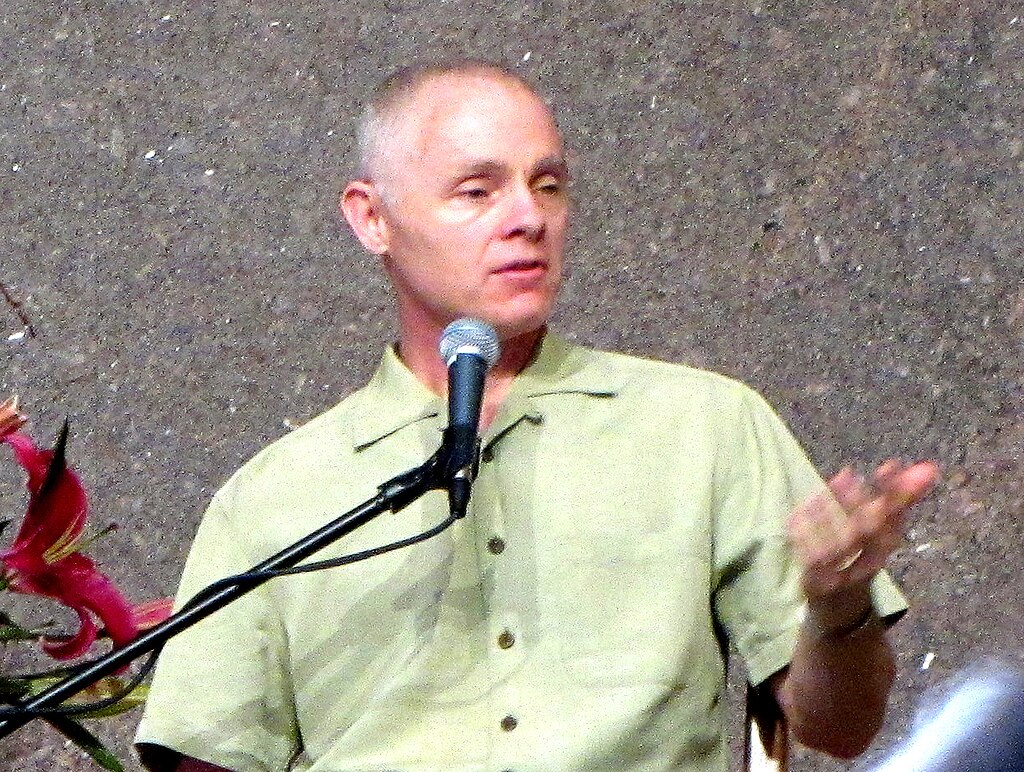
Unveiling the Essence of Truth Beyond Belief
Adyashanti's assertion that "Truth is what remains when every belief has fallen away" invites us to explore the profound distinction between belief and truth. In a world saturated with opinions, ideologies, and dogmas, this statement challenges us to peel back the layers of our conditioned understanding. It beckons us to confront the possibility that what we often accept as truth may merely be a construct of our beliefs, shaped by culture, upbringing, and personal experience. This exploration is not merely an intellectual exercise; it is a spiritual imperative that can lead to liberation and deeper self-awareness.
As we delve into this quote, we are reminded that beliefs, while they can provide comfort and a sense of identity, are inherently transient. They can shift and evolve, often leading us to confusion and conflict. The essence of Adyashanti's teaching lies in the invitation to look beyond these ephemeral constructs to discover a more profound, unshakeable truth that exists independently of our perceptions. This journey toward truth is not about discarding beliefs for the sake of nihilism; rather, it is about recognizing the limitations of belief and opening ourselves to a more expansive understanding of reality.
The image / the metaphor
The imagery in Adyashanti's quote evokes a sense of stripping away, a shedding of layers that no longer serve us. The verbs "remains" and "fallen away" suggest a process of elimination, where the superfluous is discarded, leaving behind the essence of what is real. This evokes a powerful metaphor of a sculptor chiseling away at a block of marble, revealing the statue that has always existed within. The act of removing beliefs is akin to peeling an onion, where each layer removed brings us closer to the core, the truth that lies at the heart of our existence.
Diving deeper into this metaphor, we can envision truth as a vast, open space, unconfined by the boundaries of belief. In this space, we encounter a sense of freedom and clarity that is often obscured by our attachments to ideas and identities. The process of allowing beliefs to fall away can be uncomfortable, as it may challenge our sense of self and security. Yet, it is precisely in this discomfort that we may find the fertile ground for genuine insight and awakening, where truth reveals itself in its purest form.
In the speaker's tradition
Adyashanti's teachings are deeply rooted in the non-dual tradition, which emphasizes the interconnectedness of all existence and the illusion of separation. Concepts such as *sunyata* (emptiness) and *kenosis* (self-emptying) resonate with the essence of his quote. In this context, truth transcends the dualistic nature of belief and non-belief, inviting us to experience reality as it is, free from the filters of our conditioned minds. The journey toward truth is often described as a path of *prajna*, or wisdom, which arises when we let go of our attachments to beliefs and concepts.
In the realm of non-duality, texts such as the *Heart Sutra* articulate the idea that form is emptiness and emptiness is form, suggesting that our beliefs are merely temporary manifestations of a deeper reality. This echoes Adyashanti's assertion that when beliefs fall away, what remains is the unconditioned truth of our being. The teachings of various sages across traditions converge on this point, emphasizing that the essence of truth is not something to be grasped but rather experienced in the stillness of being.
Living the teaching
Consider a modern scenario where this teaching can be applied: a heated debate among friends about political beliefs. Each person clings to their perspective, fortified by a web of beliefs that shape their identity. In this context, the challenge lies in recognizing that the truth of the situation may not reside in any one belief but rather in the shared human experience that transcends these divisions. By allowing beliefs to fall away, individuals can engage in a deeper dialogue, fostering understanding and compassion rather than conflict.
Another application of this teaching can be found in personal relationships. Imagine a moment of tension between partners, where each person is entrenched in their beliefs about the other’s actions. In such instances, the invitation to let go of these beliefs can lead to a profound transformation. By stepping back and allowing the beliefs to dissolve, both partners may discover a deeper connection rooted in love and acceptance, rather than judgment and defensiveness. This practice of releasing beliefs can cultivate a space for vulnerability and authenticity, allowing truth to emerge in the relationship.
A reflection
As we contemplate Adyashanti's profound statement, we are invited to engage in a reflective inquiry: What beliefs am I holding onto that may be obscuring my perception of truth? This question encourages us to examine the layers of our own understanding, inviting us to explore the possibility that beneath our beliefs lies a more expansive reality. In this exploration, we may find that the journey toward truth is not a destination but a continuous unfolding, a dance between belief and the deeper essence of our being.



Join the BrightStar Community
Stay connected with daily inspiration, event announcements, and community wisdom