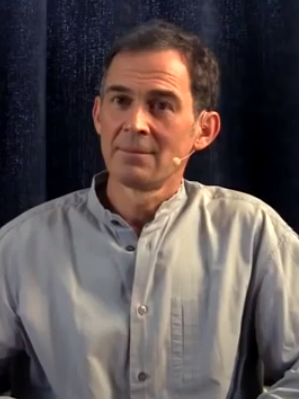
The Essence of Emotion: A Journey into Awareness
Rupert Spira's assertion that "What is the substance of an emotion? Awareness," invites us to explore the intricate relationship between our emotional experiences and the fundamental nature of consciousness. In a world often dominated by the tumult of feelings, this statement serves as a gentle reminder that beneath the surface of our emotional lives lies a deeper, unchanging awareness. Understanding this connection is not merely an intellectual exercise; it has profound implications for how we navigate our inner landscapes and interact with the world around us.
To delve deeper into this quote is to recognize that emotions, often perceived as chaotic and overwhelming, are not the essence of our being but rather experiences that arise within the vast expanse of awareness. This perspective shifts our focus from being at the mercy of our feelings to recognizing them as transient phenomena, much like clouds passing through the sky. By cultivating an awareness of our emotions, we can begin to discern their nature and, in doing so, reclaim our sense of agency and peace amidst the storms of life.
The image / the metaphor
At first glance, the quote presents a striking image: emotions as substances, with awareness as the underlying essence. The choice of the word "substance" evokes a sense of weight and permanence, suggesting that emotions are not merely fleeting sensations but rather integral components of our human experience. The verb "is" implies a state of being, inviting us to consider awareness not as a passive observer but as an active participant in the unfolding of our emotional lives.
Delving deeper into this metaphor, we can envision awareness as a vast ocean, with emotions surfacing like waves. Each wave, while distinct and momentarily captivating, is ultimately part of the same body of water. This imagery encourages us to recognize that while emotions may rise and fall, the ocean of awareness remains constant and unchanging. By anchoring ourselves in this awareness, we can navigate the ebbs and flows of our emotional experiences with greater ease and understanding.
In the speaker's tradition
Rupert Spira's teachings are rooted in the non-dual tradition, which emphasizes the interconnectedness of all things and the underlying unity of consciousness. Concepts such as *sunyata* (emptiness) and *fana* (annihilation of the self) resonate deeply with the idea that our emotions, while real, are not the ultimate truth of our existence. Instead, they are seen as temporary manifestations within the boundless expanse of awareness, encouraging practitioners to transcend the duality of self and other, subject and object.
In the context of non-dual philosophy, one might draw parallels to the teachings found in the *Upanishads*, where the nature of the self is explored as *Brahman*, the ultimate reality. Just as the *Upanishads* invite seekers to recognize their true nature beyond the fluctuations of the mind, Spira's assertion encourages us to look beyond our emotional states to the awareness that underlies them. This perspective fosters a sense of liberation, allowing us to experience emotions without being defined or limited by them.
Living the teaching
Consider a modern scenario where this teaching can be applied: imagine a moment of intense frustration during a challenging work project. Instead of becoming engulfed by the emotion, one can pause and cultivate awareness of the frustration itself. By acknowledging the feeling without judgment, one can create space to explore its origins and implications, ultimately transforming a potentially destructive experience into an opportunity for growth and understanding.
In the realm of relationships, this teaching can be particularly transformative. When faced with conflict, instead of reacting impulsively to anger or hurt, one can practice stepping back to observe these emotions as they arise. This shift in perspective allows for a more compassionate response, fostering deeper connections and understanding between individuals. By anchoring ourselves in awareness, we can navigate the complexities of human interaction with grace and empathy.
A reflection
As we contemplate Rupert Spira's profound insight, we are invited to consider: How can I cultivate a deeper awareness of my emotions, allowing them to inform rather than define my experience? This question encourages us to engage with our emotional lives in a way that honors their transient nature while simultaneously grounding ourselves in the unchanging essence of awareness. In this exploration, we may find not only clarity but also a profound sense of peace and connection to the world around us.



Join the BrightStar Community
Stay connected with daily inspiration, event announcements, and community wisdom