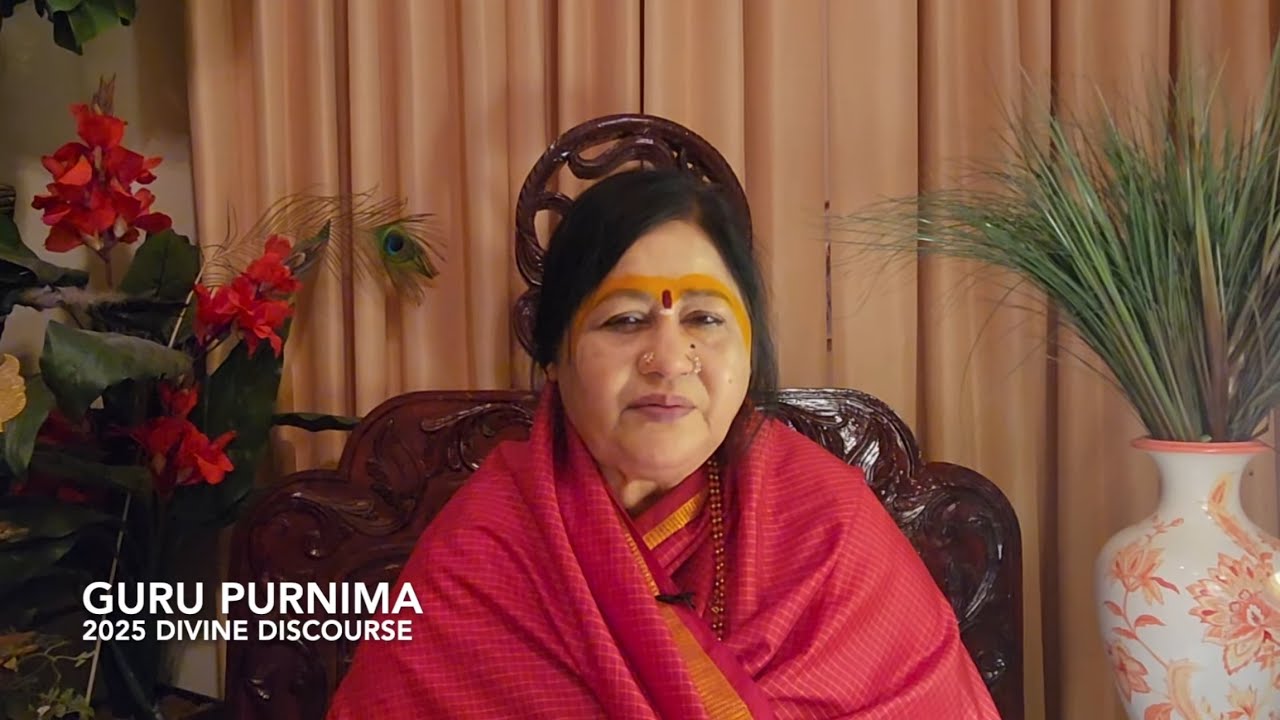
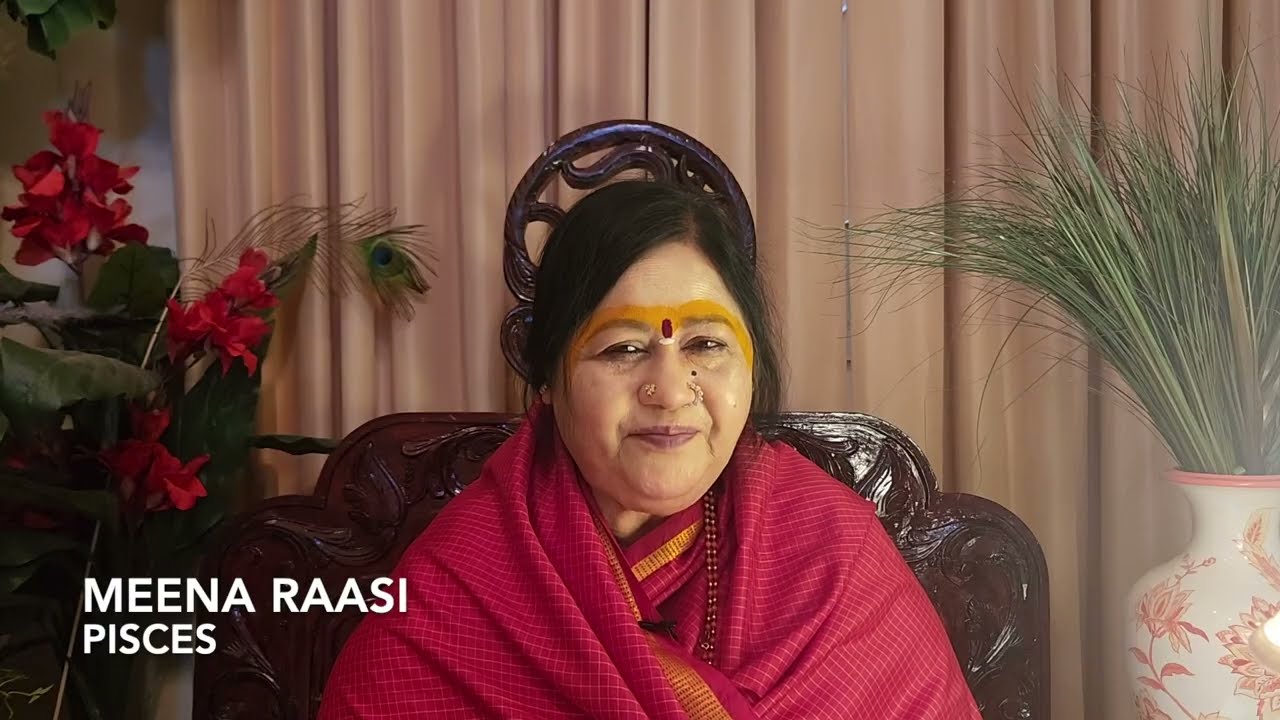
This talk traces the life and work of Amma Sri Karunamayi and the SMVA Trust, a UN-affiliated non-profit she founded in 1995. After spending 10+ years in deep meditation in South India's forest, Amma established a comprehensive framework for addressing poverty through education, healthcare, safe housing, clean water, and gender empowerment. The organization has served over 500,000 villagers across South India and expanded internationally, demonstrating a model where compassion and practical systems work together to create lasting change in vulnerable communities.
Who is Amma Sri Karunamayi and What Guided Her Path?
Amma Sri Karunamayi spent more than 10 years immersed in deep meditation and contemplation within remote forests in the Nellore district of Andhra Pradesh, South India. This extended period of spiritual practice grounded her in what the talk describes as "unconditional motherly love" and a compassion extended to all beings regardless of background. Rather than remaining in isolation, Amma channeled this spiritual foundation into direct service. In 1995, she established SMVA Trust as a 501(c)(3) non-profit organization with a deliberate mission: to serve humanity's most vulnerable and underserved communities.
The organization's work has been recognized at the global level. In 2014, SMVA Trust received associative status with the United Nations Department of Public Information (UNDPI), formalizing its role as an NGO furthering the UN's mission of social development and world peace. This recognition came not from a single dramatic intervention but from years of systematic, ground-level work across multiple sectors of community need.
How Does Education Break the Cycle of Child Labor?
In the early 1990s, SMVA Trust identified a critical problem in villages like Rapper and Gonupalli in Andhra Pradesh: child labor was endemic, and education was not accessible to most children in marginalized areas. The organization began using education as a direct intervention to break what it calls "the vicious cycle of child labor." By working closely with local leadership and village councils, SMVA Trust created pathways for young people to attend free schools offering both robust academic curriculum and value-based education.
The scale of this work is significant: over 9,000 students have completed education at these free schools. Notably, the curriculum integrates practical sustainability alongside academic subjects. Students engage in organic farming and community cleanup as part of their daily experience. Meditation and yoga are embedded into the school day, and the environment itself teaches interconnectedness. As Amma states in the talk, "only with compassion, values, and humility, education is complete." This framework suggests that academic learning without ethical grounding produces incomplete human development.
The schools also address gender equity by employing equal numbers of male and female teachers, signaling to all students that women occupy positions of authority and knowledge. This structural choice in staffing quietly challenges assumptions children may inherit about women's roles.
What Healthcare Access Looks Like in Underserved Communities
In the year 2000, SMVA Trust opened a free hospital in the Rapper mandal of Andhra Pradesh to serve a population of over 500,000 villagers who had minimal healthcare access. The hospital operates across multiple departments including Gynecology and Women's Health, Pediatrics, Cardiology, Dentistry, Radiology, Physical Therapy, and Ophthalmology. Critically, patients receive medication free of cost from the hospital's pharmacy—removing a barrier that forces families to choose between medicine and food.
The impact metrics reveal the scale: to date, over 300,000 people have been treated at the hospital. The ophthalmology program alone has performed more than 17,000 cataract surgeries, restoring sight to thousands. The hospital has also distributed over 700 wheelchairs and tricycles to restore mobility and dignity to people with mobility challenges. One concrete case illustrates the hospital's mission: a five-year-old boy named Srinivas Gardi was diagnosed with beta thalassemia major, a life-threatening blood disorder requiring monthly transfusions. When doctors recommended a hematopoietic stem cell transplant—a procedure beyond his family's financial reach—SMVA Trust facilitated his care. On October 6, 2022, Srinivas successfully underwent the transplant at Narayana Health Hospital in Bangalore with SMVA Trust's support.
Why is Safe Housing a Cornerstone of Dignity?
Beyond healthcare and education, SMVA Trust recognized that families living in huts without protection from extreme weather or dangerous wildlife face constant physical vulnerability. Many rural women lack access to safe, enclosed bathrooms, a condition that SMVA Trust identifies as leading to "challenging and undignified living conditions." In 2008, the organization began a systematic housing program in partnership with local governments. Over 200 substantial dwellings built from durable materials have been handed over to families. Importantly, these houses—like all SMVA Trust services—are provided regardless of religion, gender, or belief system, reflecting Amma's principle of universal compassion.
How Does Water Quality Impact Health Across Entire Regions?
In 2009, SMVA Trust discovered a widespread water crisis: villages across South India had dangerous levels of fluoride in their drinking water, causing fluorosis—a disease ranging from tooth discoloration to, in severe cases, bone deformation. Rather than treating the symptom in individual patients, SMVA Trust opened water refinement facilities across two states in South India. These facilities have provided clean drinkable water to over 100,000 people—many of whom had never had access to safe water at home in their own villages. This infrastructure-level intervention addresses a problem at its source rather than managing its consequences.
What is the Role of Peace Marches in Building Social Consciousness?
SMVA Trust organizes peace marches where people from all walks of life unite to promote harmony and unity. These marches serve as symbols of working together across differences. As Amma reminds participants in the talk: "we must have an equal vision and see the goodness in everyone. Let our prayers not be for ourselves alone. Let our prayers be for the welfare of all of humanity." The marches function both as public demonstrations of solidarity and as internal reminders for participants that compassion is not a private feeling but a collective practice. By bringing diverse communities together around a shared vision of peace, the organization makes visible what might otherwise remain abstract.
How Does Food Distribution Connect to Spiritual Tradition?
SMVA Trust organizes food distribution in major cities across India, the United States, and other regions globally. The talk draws on Sanskrit tradition to frame this work: "Annam means food, and danam means to donate. Thus annadanam means feeding others. Annadanam is mahadanam—or the most significant donation in the Sanatan Dharm tradition." In other words, feeding those in need is elevated to the level of a grand fire ceremony in Hindu spiritual practice. The organization frames food distribution not as charity but as an opportunity "to receive the gift of giving." The underlying logic suggests that those providing food are the beneficiaries of the exchange—gaining the spiritual benefit of generosity—while the immediate practical goal is to "help others first meet their basic needs so that they may become self-sufficient."
Why Does Gender Empowerment Require More Than Just Access?
SMVA Trust's approach to women's empowerment goes beyond opening schools. Under Amma's guidance, the organization motivates women's "sense of self-worth, their right to have access to opportunities and resources, their right to have the power to control their own lives both within and outside the home, and their ability to influence the direction of society." This framework acknowledges that access to education alone does not guarantee agency. Women must be supported in claiming their right to self-determination and societal influence. The organization combines structural interventions (equal numbers of female teachers, dedicated school programs for girls) with spiritual and psychological affirmation of women's dignity and power.
What Additional Services Does SMVA Trust Provide?
During the COVID-19 pandemic, SMVA Trust shifted to emergency relief, distributing groceries, medicines, face masks, and sanitizers to thousands of at-risk migrant workers and their families—populations especially vulnerable during lockdowns and economic collapse. The organization also operates the Gokulam project, which protects and cares for cows, particularly those that are old, injured, abandoned, or no longer productive in milk. In Hindu tradition, cows hold sacred status as symbols of wealth, fertility, and divine motherhood. The Gokulam project maintains three goshalas (cow sanctuaries) in Penshalakona, Gonupalli, and Bangalore, providing shelter, food, water, and medical care. Beyond animal welfare, the project engages in breeding and conserving indigenous cow breeds and promoting organic farming practices, connecting animal protection to agricultural sustainability.
The organization also responds to natural disasters. When flash floods devastated Kurnool district in 2009 and Cyclone Hudhud struck the coastal city of Vishakapatnam in 2014, SMVA Trust distributed emergency supplies including pots, pans, groceries, and clothing to affected families. These disaster relief efforts address immediate survival needs while supporting families in rebuilding stable, independent lives.
Where to go from here
SMVA Trust's model demonstrates that compassion, when organized into systematic programs addressing root causes (not just symptoms), can create lasting change. The organization's structure—rooted in Amma's spiritual practice but expressed through healthcare, education, infrastructure, and economic empowerment—offers a template for how spiritual vision translates into tangible community benefit. Whether through peace marches that make solidarity visible, schools that embed values into academics, or water treatment facilities that prevent disease before it occurs, SMVA Trust shows how each intervention connects to others. For anyone interested in understanding how global service organizations operate, what sustainable community development looks like in practice, or how spirituality and pragmatism can coexist in social change work, SMVA Trust's journey—now spanning three decades and multiple continents—provides both inspiration and concrete methodology.