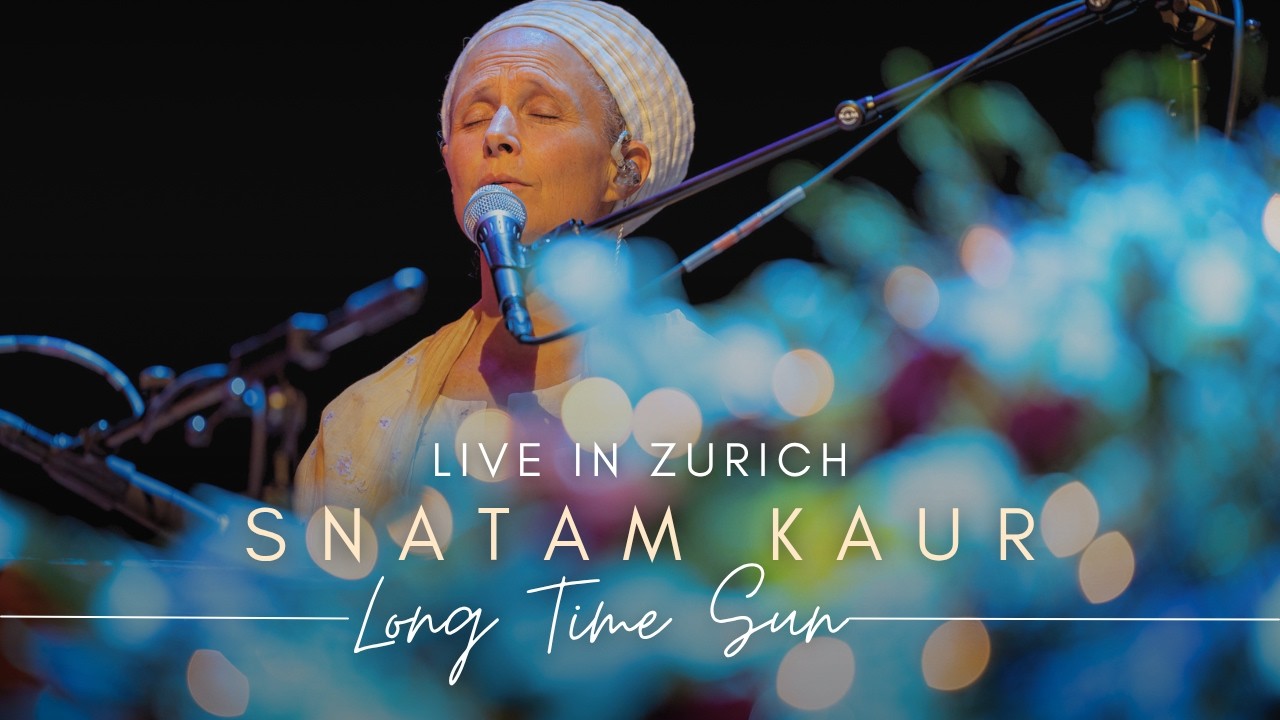
Snatam Kaur, an acclaimed kirtan artist, performs the devotional mantra "Mere Raam" (meaning "My Beloved God" or "My Divine Self") in a live ensemble setting within a California redwood forest. The performance features Todd Boston, Matthew Schoening, and Ramesh Kannan, merging traditional call-and-response chanting with contemporary instrumental accompaniment. Filmed in the natural acoustics of old-growth woodland, the performance embodies the intersection of sacred sound practice, community devotion, and the healing resonance of nature as spiritual context.
What Is Mere Raam and Why Does It Matter in Kirtan Practice?
Mere Raam is a classical Sanskrit mantra rooted in Hindu and Sikh devotional traditions. The name itself invokes intimate relationship with the Divine—"Mere" means "my" and "Raam" refers to the eternal, all-pervading consciousness or God. In kirtan, the practice of call-and-response chanting, this mantra becomes a vehicle for deepening devotion and emotional resonance with the sacred. Rather than treating the Divine as distant or abstract, the mantra grounds practitioners in a felt sense of personal relationship. This is central to devotional paths across traditions: the idea that the infinite can be met, sung to, and experienced through the human heart.
When Snatam Kaur leads Mere Raam, she is not merely reciting text; she is inviting listeners and co-singers into a field of collective intention. Kirtan is fundamentally participatory—it relies on the back-and-forth exchange between leader and participants to generate momentum, emotional opening, and spiritual momentum. The live format, with an ensemble, amplifies this: multiple musicians create harmonic and rhythmic layers that support deeper entrainment and absorption.
How Does the Redwood Forest Setting Shape the Spiritual Experience?
The choice to film Mere Raam live in the Redwoods is not incidental. Redwood groves have been sacred spaces for indigenous peoples for millennia, and their towering, ancient presence evokes awe and interconnection. Sound behaves differently in forests: the natural resonance and dampening properties of old-growth woodland create an acoustic envelope that is quite distinct from concert halls or studios. The earth, the trees, the moisture in the air all become part of the sonic field.
This environmental context deepens the spiritual dimension of the practice. Kirtan is not meant to be an isolated individual experience; it is fundamentally communal and, increasingly in contemporary practice, ecological. Performing sacred sound within a living ecosystem—literally surrounded by beings of different species, ancient wood, flowing water—situates the mantra within a larger context of interconnection and reverence. The Redwoods become a kind of natural mandala, a sacred container that amplifies the intention to invoke and commune with the Divine. For viewers watching the video, the forest itself becomes part of the teaching: a reminder that the sacred is not separate from nature, but woven through it.
What Role Do Ensemble Instruments Play in Deepening the Mantra?
The performance features three additional musicians: Todd Boston, Matthew Schoening, and Ramesh Kannan. In traditional kirtan, the ensemble typically includes harmonium (keyboard instrument), tabla (hand drums), and supporting voices or instruments. Each musician has a specific role in holding and amplifying the mantra's resonance.
The harmonium provides harmonic structure and melodic continuity, anchoring the call-and-response in a tonal center. The tabla creates rhythmic pulse and complexity, often using traditional patterns (taals) that have been refined over centuries. Supporting voices harmonize, echo, and create antiphonal (back-and-forth) interplay with the lead voice. When these elements work together in a lived ensemble—in real time, responding to each other and the energy in the room—something happens that cannot be achieved through solo practice or recordings. The musicians must listen to each other deeply, anticipate shifts in tempo or dynamics, and collectively hold a container for participants' devotion.
For listeners, this ensemble approach is significant because it models collective attunement. Rather than a virtuoso performance (though Snatam Kaur is certainly a skilled vocalist), the emphasis is on service and co-creation. Each musician is supporting the mantra and the participants, not showcasing ego or technical prowess. This ethos—that the practice is bigger than any individual—is a core principle of authentic kirtan.
How Does Call-and-Response Chanting Engage Both Brain and Heart?
Kirtan's call-and-response structure is psychologically and neurologically significant. When the leader chants a line and the group responds, several things happen simultaneously:
- Synchronization: Participants align their breath, voice, and heartbeat with others and with the mantra's rhythm, creating entrainment. This synchrony has been shown to reduce stress, lower cortisol, and promote parasympathetic nervous system activation.
- Embodied meaning-making: Unlike silent reading or listening, singing the mantra means the person is actively producing the sound, feeling its vibration in their body, and internalizing its meaning through somatic engagement.
- Ritual and repetition: The repetitive structure provides a container that gradually quiets the discursive mind, allowing practitioners to access subtler layers of consciousness. This is not monotonous; rather, subtle shifts in emotion, tone, and intention keep the practice alive and responsive.
- Community and social bonding: Chanting together creates a felt sense of belonging and shared purpose. This is biologically and psychologically healing, especially in cultures where isolation and fragmentation are widespread.
In the context of this live performance in the Redwoods, these mechanisms are at play both for those physically present and, to some extent, for viewers of the video. Even watching others engaged in sincere, embodied chanting can activate mirror-neuron systems and create a resonance response, allowing viewers to glimpse the depth of the practice.
Why Is Snatam Kaur a Significant Voice in Contemporary Kirtan?
Snatam Kaur is a devotional singer and yogini who has spent decades studying Sikh music, Sanskrit, Kundalini Yoga, and mystical traditions. Her voice is distinctive—clear, warm, and capable of both intimate vulnerability and soaring range. More importantly, she brings authenticity and depth to her practice; she is not performing kirtan as entertainment, but as a living spiritual discipline.
In contemporary Western contexts, where kirtan has become more widely known, there is often a risk of it being reduced to a pleasant, feel-good activity. Snatam Kaur's approach insists on the mantra's real power and real purpose: not to make people feel temporarily nice, but to invoke genuine transformation of consciousness and deepening of love for the Divine. Her willingness to perform in wild, natural spaces—like the Redwoods—rather than only in concert halls or yoga studios, also reflects a commitment to the practice as a lived spiritual path, not a commodified product.
What Teachings Are Embedded in the Choice to Film "Live"?
The designation "Live in the Redwoods" signals something important: this is not a studio recording, edited and perfected. Live performance carries inherent unpredictability—the weather, the acoustics of the space, the energy of those present, the musician's own state of mind—all become part of the recording. There is no opportunity to fix mistakes or polish the performance. This mirrors a core principle of contemplative practice: showing up fully, moment to moment, without trying to manufacture a particular outcome.
For viewers, watching a live performance creates a different relationship than watching a pristine studio version. There is a sense of immediacy and realness. If a voice cracks, if the rhythm shifts, if a musician needs to adjust—these are not failures but part of the authentic unfolding of the moment. This vulnerability is spiritually significant; it reflects the yogic principle of surrendering the ego's need for control and accepting what arises with grace.
Jennifer Gigantino's videography and editing honor this live quality. Rather than slick production values, the film allows the forest, the musicians, and the mantra to be the focus. The camera work likely emphasizes the gathering, the instruments, the faces of the musicians—all elements that ground viewers in the present, embodied reality of the moment.
Where to Go From Here
If this performance resonates with you, consider deepening your engagement with kirtan in several ways:
- Explore Snatam Kaur's broader discography: Her albums often blend traditional mantras with contemporary production, offering varied entry points into the practice.
- Learn the mantra yourself: If you do not already know Mere Raam, seek out versions you can learn. Many yoga studios and online platforms offer kirtan instruction. Singing the mantra regularly, even alone, can deepen your own spiritual practice.
- Attend a live kirtan session: If possible, participate in a live call-and-response kirtan in your community. The experience of singing with others, in real time, is qualitatively different from watching or listening.
- Reflect on the natural setting: Consider how your own practice might shift if you engaged with sacred sound in natural spaces—a forest, a park, by water. What changes when the Divine is invoked within a living ecosystem rather than in an enclosed room?
- Study the lineage and meaning: Dive deeper into the Sikh and Hindu traditions from which these mantras emerge. Understanding the cultural and spiritual context enriches practice and honors the teachers and lineages who have kept these traditions alive.