What Is Kirtan and How Does It Function in Spiritual Practice?
Kirtan is a form of Sanskrit chanting rooted in bhakti yoga traditions, traditionally practiced in Hindu and yogic contexts across South Asia. In its essence, kirtan operates as call-and-response: a leader (often called the "lead singer" or kirtan wallah) initiates a mantra or sacred name, and participants echo it back. This simple structure contains profound layers of practice—it is simultaneously meditation, devotion, rhythm training, and collective energetic alignment.
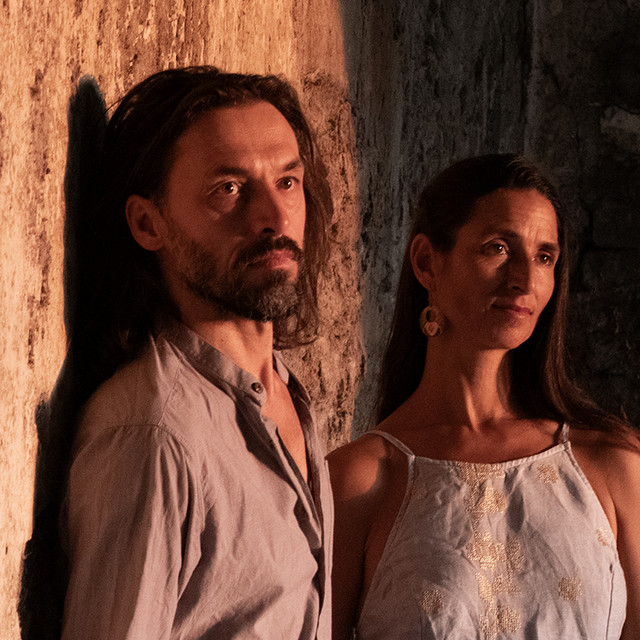
The presence of both Mirabai Ceiba and Mahesh Vinayakram at this event reflects the modern Western adaptation of kirtan, where the practice has evolved from temple and ashram settings into festival and concert environments. Mirabai Ceiba, a Swiss-born kirtan artist who has studied extensively in Indian classical vocal traditions, brings melodic sophistication and emotional depth to the form. Mahesh Vinayakram, known for his mastery of South Indian percussion and rhythm, provides the temporal foundation that makes kirtan more than just singing—it becomes a embodied, rhythmically sophisticated practice.
How Does Call-and-Response Chanting Deepen Individual Meditation?
One of the central mechanisms of kirtan is its capacity to merge individual consciousness with collective energy. When a group chants together, the repetition of sacred sounds creates a resonance that individual meditation alone may not produce. This is not merely psychological or emotional—yogic philosophy understands mantras as vibrational frequencies that reorganize the subtle body and consciousness itself.
In a live session like this one at Yoga Mela, the exchange between leader and participants serves multiple functions. First, it removes the demand for intellectual processing: participants need not memorize complex Sanskrit lyrics or understand their meanings intellectually to participate fully. The simple act of listening and repeating creates a meditative state. Second, the rhythm established by the leader—often supported by tabla, mridangam, or other percussion—provides a framework that anchors the mind. Without this structure, the mind might wander; within it, the mind naturally settles into the present moment.
Mahesh Vinayakram's presence underscores the vital role of rhythm in this process. In South Indian classical music traditions from which much modern kirtan draws, tala (rhythmic framework) is considered as essential as raga (melodic framework). The percussion maintains not just a beat but a complete temporal architecture within which the melody and voice can breathe and evolve.
What Is the Role of the Kirtan Leader in Group Practice?
The kirtan leader serves as both musician and facilitator. Mirabai Ceiba's role in this session would involve selecting which mantras to use, determining the pace and emotional arc of the practice, sensing the energy of the room, and adapting the material accordingly. This requires both technical skill and intuitive responsiveness.
A skillful kirtan leader knows when to slow down the tempo to deepen introspection, when to accelerate it to raise energy, and when to repeat the same mantra many times versus shifting to a new one. The emotional register also matters: some mantras carry supplication and yearning (bhakti rasa), others carry celebration and ecstasy, still others carry reverence or contemplation. The leader holds responsibility for creating a coherent emotional and spiritual arc across the session, not just stringing together songs.
In the context of a festival performance like Yoga Mela, there is also a pedagogical dimension. A live performance is not a private ritual but a teaching event. Participants are watching and learning how to approach this practice themselves. They observe not just what is sung but how it is sung—the breath work, the emotional openness, the relationship with the instrument or percussion partner.
How Do Traditional Instruments Support Modern Kirtan Practice?
The collaboration between Mirabai Ceiba and Mahesh Vinayakram illustrates the importance of instrumental support in contemporary kirtan. While kirtan can technically be performed with voice alone, the addition of skilled percussion fundamentally transforms the experience. Mahesh Vinayakram's rhythmic mastery would provide multiple layers of benefit:
- Temporal anchoring: The percussion gives participants a clear pulse to follow, making group participation more accessible, especially to those unfamiliar with Indian rhythmic traditions.
- Rhythmic complexity: South Indian percussion traditions allow for sophisticated polyrhythms and syncopations that create hypnotic, trance-inducing states—states often sought in meditative and devotional practice.
- Energetic amplification: A skilled percussionist can raise the energy of a room, intensify focus, and create a sense of sacred space through rhythm alone.
- Call-and-response mirroring: The percussion can echo, complicate, or foreground aspects of what the lead voice is doing, creating a multi-layered dialogue rather than a simple accompaniment.
In festival contexts, this kind of instrumental partnership also addresses a practical reality: group kirtan in large gatherings requires projection and clarity. A voice supported by responsive percussion carries further and holds group attention more effectively than voice alone.
What Makes Yoga Mela an Important Context for This Practice?
Yoga Mela is a contemporary yoga festival, and the inclusion of kirtan sessions reflects the significant place that devotional practice now holds within Western yoga culture. The festival context is worth noting because it shapes how kirtan functions and how it is understood.
In traditional settings—Indian temples, ashrams, or devotional communities—kirtan might be understood primarily as a religious or spiritual practice serving ritual functions. In festival contexts, it exists alongside asana (posture) classes, breathwork workshops, and philosophical talks. This creates a more eclectic container. Participants come from diverse spiritual backgrounds and may bring varying levels of familiarity with Hindu or yogic philosophy. A session like this one must function both as genuine spiritual practice for the initiated and as introduction and gateway for the curious.
Mirabai Ceiba's work has been central to making kirtan accessible to Western practitioners. Her approach emphasizes the universality of the practice—the reality that devotional chanting exists across traditions and that Sanskrit mantras need not require religious conversion or cultural displacement to access their benefits. Mahesh Vinayakram, similarly, brings a musician's approach: excellence of craft, clarity of communication, and openness to diverse musical influences.
How Does Kirtan Bridge the Gap Between Performance and Participation?
One of the distinguishing features of kirtan, even in its modern festival form, is that the boundary between performer and audience is remarkably porous. Unlike a concert where the audience observes passively, kirtan audiences are expected to engage—to sing, to respond, to participate in the creation of the soundscape. This collapses the traditional performer/audience binary.
In a session with Mirabai Ceiba and Mahesh Vinayakram, both artists would be watching the room carefully, responsive to the energy coming back from participants. If the group is singing with full engagement, the leaders will feel that feedback and often respond by deepening the practice or extending particularly resonant moments. If energy flags, they might shift the tempo, change the mantra, or introduce a new element to re-engage the collective attention.
This dynamic quality—the improvisational responsiveness to the room—is one of the things that distinguishes live kirtan from recorded kirtan. A recording captures a moment but cannot respond to listeners. A live session is a co-creation between leaders and participants, shaped by the specific constellation of people, energy, and circumstances present in that moment.
Where to Go From Here
If this session sparks interest in exploring kirtan further, there are multiple entry points. Listen to recorded kirtan by Mirabai Ceiba and other contemporary kirtan artists to familiarize yourself with the music and melodies. Many of these recordings are freely available and serve as excellent meditation aids, whether or not you intend to participate actively in group sessions.
Seek out live kirtan sessions in your region or at yoga festivals. The participatory nature of live kirtan cannot be fully conveyed through description or even through audio recordings—the experience of singing with others, feeling the collective breath and voice, is something that must be experienced directly. Most sessions are free or donation-based and require no prior knowledge or skill. Simply showing up with openness and a willingness to repeat simple Sanskrit sounds is sufficient to begin the practice.
For those interested in deepening understanding of the philosophical and spiritual foundations, explore basic texts on bhakti yoga and devotional practice. The Bhagavad Gita's discussion of bhakti yoga, or introductory texts on raga and tala in Indian classical music, can provide intellectual scaffolding that enriches the direct experience of chanting. Understanding that these sounds emerge from thousands of years of contemplative and spiritual tradition adds another dimension to why they have power.
Finally, consider that the benefits of kirtan are not confined to the performance moment. Many people find that mantras learned in group sessions stay with them—they become tools for daily meditation, for grounding in difficult moments, for accessing states of calm and connection during ordinary hours. This is the deepest gift of practices like kirtan: not spectacular experiences in special moments, but subtle and reliable shifts in how the nervous system, heart, and mind habituate to presence and peace.
]]>