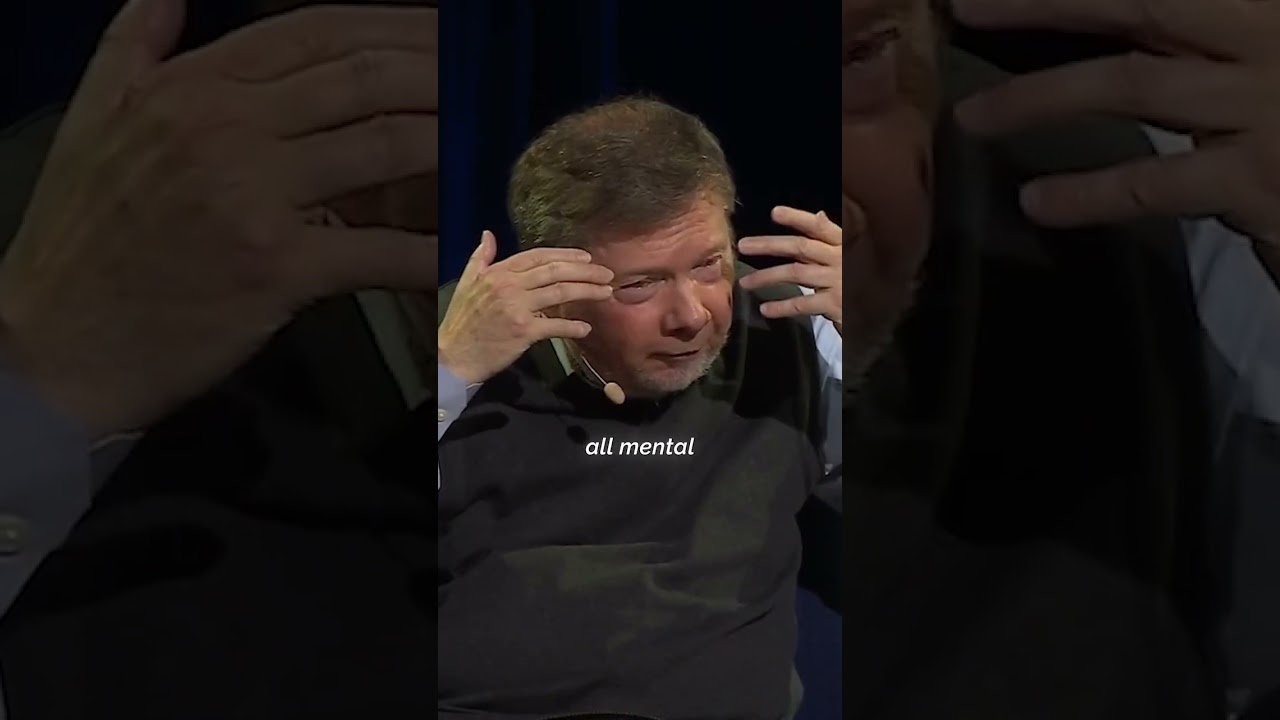
Sadhguru discusses his unconventional approach to fatherhood and how he raised his daughter Radhe while simultaneously building Isha Foundation from its inception. Rather than imposing spiritual beliefs or doctrines, Sadhguru emphasizes creating the right inner conditions—presence, authenticity, and freedom—as the foundation for healthy parenting. The talk reveals that parenting, like spiritual work, requires an understanding of human consciousness rather than adherence to fixed methods or rules.
What Does Presence Mean in Parenting?
Sadhguru's central insight about parenting centers on presence rather than proximity. Being physically present while building a spiritual organization from scratch presents obvious challenges, yet he frames this differently: the quality of presence matters far more than the quantity of time. When Sadhguru was actively developing Isha Foundation, he could have spent minimal time with Radhe, but the moments they shared carried depth and intentionality.
This approach aligns with a broader principle in Sadhguru's teaching: that children are not clay to be molded according to parental preference, but conscious beings who need the space to unfold naturally. Presence, in this framework, means being fully available—mentally, emotionally, spiritually—rather than being distracted or preoccupied even when physically near. A parent lost in anxiety, ambition, or internal conflict cannot truly be present, regardless of how many hours they spend with their child.
Should Parents Impose Their Spiritual Beliefs on Children?
One of Sadhguru's most striking positions is his refusal to force spiritual practice or belief systems onto Radhe. This reflects a deeper understanding: imposing ideology, even well-intentioned spiritual ideology, creates a different kind of bondage. The child may either rebel against it or internalize it without genuine understanding, both of which limit their capacity for authentic inquiry.
Instead, Sadhguru created an environment where Radhe could observe, experience, and choose. By living his principles rather than preaching them, he allowed spiritual understanding to emerge organically. This approach requires tremendous restraint from the parent—the willingness to let go of the outcome and trust the child's own unfolding process. It mirrors the yogic principle that transformation cannot be forced; it can only be invited.
How Can Parents Balance Ambition With Family Responsibility?
Sadhguru's situation—building a global spiritual organization while raising a child—presents a practical tension many ambitious parents face. His response is not to compartmentalize life into "work time" and "family time," but to recognize that these are not fundamentally separate domains. Both require the same inner quality: consciousness, intention, and presence.
The mistake many parents make is believing they must choose between personal growth and family responsibility. Sadhguru's life demonstrates that the pursuit of meaningful work—whether spiritual or otherwise—does not inherently require abandoning genuine parenting. What matters is not dividing time equally, but ensuring that whatever time is spent is authentic and fully engaged. A parent working toward something meaningful while simultaneously being honest with their child about the demands and reality of that work often models something far more valuable than undivided attention.
What Role Does Authenticity Play in Parenting?
Throughout his discussion, Sadhguru emphasizes authenticity as a cornerstone of parenting. Children are remarkably attuned to inauthenticity; they sense when a parent is pretending, performing, or operating from fear rather than clarity. When Radhe grew up watching her father build an organization, she witnessed both the vision and the challenges, the successes and the setbacks. This honest exposure to the reality of an adult's life, rather than a sanitized or idealized version, creates a more grounded understanding of human existence.
Authenticity also means being honest about limitations. Sadhguru did not present himself as a perfect parent with all the answers. Instead, he embodied an ongoing inquiry into how to be present and conscious in the face of competing demands. This models for children that life is not about achieving perfection, but about maintaining awareness and intention within inherently complex circumstances.
How Does a Child Develop Inner Freedom?
A fundamental theme in Sadhguru's teaching on parenting is the development of inner freedom in the child. This goes beyond mere permissiveness—allowing a child to do whatever they want. Rather, inner freedom emerges when a child is not psychologically bound by unexamined parental conditioning, unconscious family patterns, or inherited beliefs that were never truly questioned.
Sadhguru creates space for this freedom by not imposing a predetermined path. Radhe was not told she must become a yogi, must follow Sadhguru's spiritual practices, or must dedicate her life to the foundation. She was exposed to these possibilities and allowed to make her own choices. This approach respects the child's own intelligence and consciousness, rather than treating parenting as a project of control or molding.
What About Structure and Boundaries?
While Sadhguru emphasizes freedom, this does not translate to chaos or lack of structure. The distinction he makes is crucial: boundaries and structure serve the child's wellbeing and development, not the parent's need for control or comfort. A boundary established with clarity and love—such as "we don't speak to each other with disrespect"—is different from a rule imposed out of parental authority or habit.
Structure becomes problematic when it becomes rigid ideology, when a parent enforces rules without understanding or flexibility, or when the rules serve the parent's ego rather than the child's growth. Sadhguru's approach suggests that structure should arise from genuine care and an understanding of what actually supports a child's development, rather than from inherited cultural scripts or the parent's own unhealed patterns.
How Does Parenting Mirror the Spiritual Path?
For Sadhguru, parenting is not separate from spiritual practice—it is a profound opportunity for self-understanding. The moments of frustration, the impulse to control, the fear about how the child will turn out—all of these reveal the parent's own psychological material. A spiritually-oriented parent recognizes that the child is a mirror, and the reactions that arise are invitations to deeper inquiry about one's own consciousness.
This perspective fundamentally shifts the relationship. Instead of the parent approaching the child as a problem to be solved or a project to be perfected, the parent sees the relationship as a crucible for their own evolution. When approached this way, parenting becomes a practice—a daily opportunity to move toward greater presence, less reactivity, and deeper understanding of one's own nature.
Where to Go From Here
Sadhguru's insights on parenting are rooted in principles that extend far beyond the family unit. His core message—that presence, authenticity, and freedom matter far more than methods or rules—applies to anyone invested in another person's development, whether as a parent, teacher, mentor, or guide. The invitation is to examine your own patterns: Do you parent (or teach, or lead) from presence or from conditioning? From clarity or from fear? From control or from genuine care for the other person's unfolding?
If you are exploring these questions, consider experimenting with small shifts: being fully present for even five minutes rather than partially present for an hour; speaking your authentic truth about your own struggles and limitations rather than projecting a perfect image; creating space for your child (or student, or mentee) to make their own discoveries rather than insisting they adopt your conclusions. These small changes, sustained over time, create the inner conditions from which genuine transformation can emerge—for both the child and the parent.