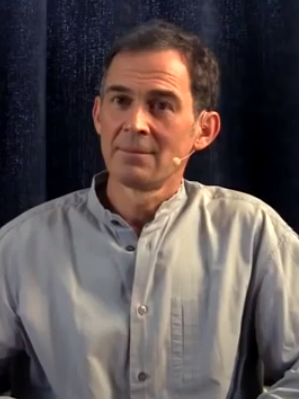
The Quiet Power of Awareness
Rupert Spira's assertion that "Awareness is its own evidence" invites us to explore the profound nature of consciousness itself. In a world often dominated by external validation and empirical proof, this statement challenges us to recognize that the very act of being aware is a testament to our existence and understanding. It suggests that awareness does not require external affirmation; rather, it stands as a self-evident truth, illuminating the essence of our being.
This notion of awareness as self-evidence is particularly significant in our contemporary lives, where distractions abound and the quest for validation can overshadow our intrinsic understanding. By turning our attention inward, we can cultivate a deeper appreciation for the quiet yet powerful presence of awareness. This shift not only enriches our spiritual journey but also fosters a sense of peace and clarity in navigating the complexities of life.
The image / the metaphor
At first glance, the phrase "Awareness is its own evidence" conjures a vivid image of light illuminating a dark room. The verbs "is" and "evidence" suggest a state of being that transcends mere observation; awareness itself becomes the illuminating force that reveals truth. This imagery evokes a sense of immediacy and intimacy, as if awareness is a gentle guide, leading us through the labyrinth of our thoughts and emotions.
Diving deeper into this metaphor, we can see awareness as a mirror reflecting our inner landscape. Just as a mirror does not alter the image it reflects, awareness does not impose judgment or interpretation; it simply reveals what is present. This understanding invites us to embrace our experiences without the need for external validation, allowing us to find solace in the simple act of being aware.
In the speaker's tradition
Rupert Spira's teachings are rooted in the non-dual tradition, which emphasizes the unity of consciousness and the interconnectedness of all existence. Concepts such as *advaita* (non-duality) and *sunyata* (emptiness) resonate deeply with the idea that awareness is self-evident. In this framework, the distinction between subject and object dissolves, revealing that awareness itself is the fundamental reality from which all experiences arise.
In his work, Spira often references the teachings of Advaita Vedanta, where the realization of one's true nature as pure awareness is paramount. This aligns with the insights found in texts such as the *Upanishads*, which articulate the idea that the ultimate truth is not found in external phenomena but in the recognition of the self as consciousness itself. Thus, the statement "Awareness is its own evidence" serves as a succinct encapsulation of this profound philosophical understanding.
Living the teaching
Consider a modern scenario where an individual grapples with self-doubt in their professional life. In moments of uncertainty, they might seek validation from colleagues or superiors, looking for external evidence of their worth. However, by embracing the teaching that awareness is its own evidence, they can shift their focus inward, recognizing that their ability to be aware of their thoughts and feelings is a powerful affirmation of their existence and capabilities. This internal validation can foster resilience and confidence, allowing them to navigate challenges with greater ease.
In the context of relationships, this teaching can manifest in moments of conflict or misunderstanding. Instead of seeking validation from a partner or attempting to prove one's point, one might pause to cultivate awareness of their emotions and reactions. By doing so, they create space for deeper understanding and connection, recognizing that the awareness of their feelings is a valid and essential part of the relational dynamic. This practice not only enhances communication but also nurtures empathy and compassion within the relationship.
A reflection
As we contemplate the profound statement "Awareness is its own evidence," we are invited to explore the nature of our own awareness. What does it mean for you to recognize that your capacity to be aware is a fundamental truth of your existence? In moments of doubt or uncertainty, how might you turn inward to find validation in the simple act of being aware? This reflection can serve as a guiding light on your spiritual journey, encouraging you to trust in the inherent wisdom of your own consciousness.



Join the BrightStar Community
Stay connected with daily inspiration, event announcements, and community wisdom