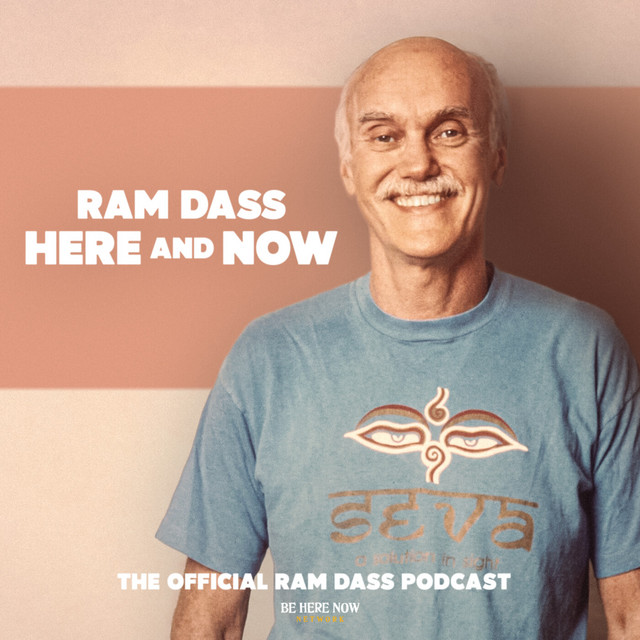
Ram Dass performs John Lennon's "Imagine," a one-minute cover that serves as a contemplative gateway into the song's core spiritual teaching: the dissolution of the constructed boundaries—nation, religion, ideology, property—that fragment human consciousness and prevent the experience of fundamental unity. The song functions not as escapist fantasy but as a practical invitation to recognize what spiritual traditions call "non-dual awareness," where the illusion of separation collapses and only love remains.
Why "Imagine" Remains a Spiritual Manifesto
John Lennon's "Imagine" is often dismissed as idealistic pop philosophy, yet it articulates the exact vision that sits at the heart of Hindu Vedanta, Buddhism, Sufism, and contemporary non-dual teaching. When Ram Dass performs the song, he is not simply honoring a rock classic—he is affirming a spiritual teaching he has spent decades transmitting: that the self we believe ourselves to be is constructed, and that liberation lies in seeing through that construction to the interconnectedness beneath.
The opening lines—"Imagine there's no heaven / It isn't hard to do / Nothing to kill or die for"—dissolve the metaphysical frameworks that have historically justified violence, war, and the subordination of one group to another. Lennon does not argue against the existence of the transcendent; rather, he suggests that our conceptual maps of the transcendent become tools of domination. When Ram Dass sings these words, he brings the voice of someone who has directly investigated these questions through meditation, psychedelics, and service in India, lending the song an experiential weight that mere idealism cannot carry.
What Is the Constructed Self That Keeps Us Divided?
The song's power lies in its naming of the ego structures that create the sense of "us" and "them." Religion, nation-state, ideology, and property are not inherently evil—they are useful mental frameworks. But when we identify with them as fundamental truths about who we are, they become prisons. A Hindu does not inherently hate a Muslim; a Christian does not inherently despise a communist. These hatreds are learned, installed by the stories we tell about identity and belonging.
Ram Dass, born Richard Alpert, lived this truth directly. He was an American, a Harvard psychologist, a Jewish intellectual. Then he met his guru in India, Maharaj-ji, and discovered that none of these labels touched the deepest dimension of his being. The verse "no countries too / nothing to kill or die for" is not a call to political chaos; it is a recognition that patriotism, when rooted in ego-identification, becomes a justification for harm. The teaching is: imagine seeing a human being as simply a human being, not as a bearer of flags and doctrines.
The Invitation to Imagine All the People in Peace
"Imagine all the people living life in peace, you." The song's central image is not apocalyptic or utopian in the political sense. It is a direct instruction in meditation. When you imagine something with full attention and emotional resonance, you are rehearsing a possibility in your nervous system. You are weakening the grip of the default story—"people are fundamentally divided and in conflict"—and strengthening an alternative neural pathway: "people can live in peace."
This is not mere positive thinking. Neuroscience now confirms that visualization rewires the brain; contemplative practice shifts the habitual patterns that generate suffering. Ram Dass has long taught that the practice of loving-kindness meditation (metta) works precisely this way: by repeatedly wishing peace and well-being to all beings—friends, strangers, enemies—you are undoing the contraction of the heart that sees others as separate and threatening. "Imagine all the people" is an invitation to this same practice, expressed through Lennon's secular-spiritual vocabulary.
What Does It Mean to Be a Dreamer, Not the Only One?
"You may say I'm a dreamer, but I'm not the only one." This is the song's assertion of the collective possibility of awakening. Lennon acknowledges that his vision sounds naive to the ego-dominated mind. Of course we have countries, religions, possessions. These are "real." But he appeals to the listener's own intuition: you have felt it too, haven't you? You have glimpsed the possibility of unity. You have loved someone in a way that dissolved your sense of separation. You have experienced a moment of profound peace where all the divisions seemed gossamer-thin.
Ram Dass embodies this teaching. He is not a solitary mystic withdrawing from the world. He is a teacher insisting that the vision of unity is not fringe or exotic—it is the birthright of every human being and increasingly recognized as essential to human survival. When he sings "I hope someday you'll join us," he is extending an invitation that is simultaneously humble and radical: there is a way of seeing and being that is available to you right now, and it does not require you to abandon your humanity or your engagement with the world.
Religion and the End of Separation
The phrase "and no religion too" has sparked controversy and misinterpretation. Ram Dass, who has spent decades honoring multiple spiritual traditions and serving in India through his guru's lineage, does not advocate for the abolition of religious practice. Rather, he and Lennon are pointing to the problem of religious identification—the hardening of spiritual insight into doctrine, dogma, and boundary-making. A true spiritual tradition points beyond itself, toward direct experience. When it becomes a club, a source of superiority, a justification for excluding or harming "non-believers," it has betrayed its own deepest purpose.
Ram Dass's own path illustrates this perfectly. He came to spirituality through LSD with Timothy Leary, then found a living guru and studied within the Hindu tradition. But his teaching is not "become a Hindu." It is "recognize the Self in all beings, in all traditions, in all moments." The religion he invites us to release is the petty-ego version, the tribal version. The spiritual practice he affirms—meditation, service, devotion, wisdom—transcends all denominations.
How Does This Vision Address Violence and Fear?
Beneath every conflict—personal, national, religious—lies fear. We hoard property because we fear scarcity. We cling to national identity because we fear obliteration. We defend religious dogma because we fear meaninglessness. Lennon's "nothing to kill or die for" cuts directly to the root: if there is no scarcity, no threat to our fundamental existence, what would we kill for? What would we die defending?
The spiritual answer is: nothing external. This is not passivity; it is the fruit of genuine security. When you know yourself as eternal consciousness, temporarily housed in a body, you no longer need to defend the body's props and costumes with violence. You can defend justice, protect the vulnerable, work for change—but from love, not fear. This is the difference between the soldier who fights from patriotic fervor and the bodhisattva who acts from compassion for all beings.
Possessions and the Illusion of Ownership
"No possessions" is perhaps the verse most easily misread as naïve. Ram Dass, who has lived as a renunciate at times and who has given away much to service and charity, does not advocate literal homelessness or the abandonment of resources. Rather, he teaches what all wisdom traditions teach: the illusion of ownership. You do not own your house or your money or your body. You are temporarily its steward. The universe moves through you; you are not the fixed point of control you believe yourself to be.
When this is truly realized—not as concept but as lived understanding—greed evaporates. Not through moral struggle, but through the dissolution of the "me" that was doing the grasping. You still use resources, but without the desperate clinging that generates suffering. You share not from guilt or obligation, but from the overflow of a heart that recognizes itself in all beings. This is the revolution Lennon's song proposes—not the violent overthrow of property relations, but the inner transformation that makes hoarding and violence seem absurd.
Where to Go From Here
Ram Dass's one-minute cover of "Imagine" is an invitation, not a manifesto to be argued about. The next step is not intellectual agreement with Lennon's lyrics, but direct investigation through practice. Sit in meditation and watch the thoughts that arise: "I am American," "I am Catholic," "I own this," "I deserve more." Notice how each thought carries a contraction of energy, a narrowing of awareness. Then, gently, imagine the opposite. Imagine releasing these identities, even for a moment. What remains? What is aware of all these labels arising and passing?
Engage with loving-kindness meditation. Begin with someone you love, and wish them peace. Then extend it to a neutral person, a difficult person, and finally to all beings. Notice how the heart opens, how the boundary between "me" and "them" softens. This is the practice Lennon was describing. This is what Ram Dass has dedicated his life to teaching and exemplifying: that the vision of unity is not a fantasy. It is the deepest reality, available right now, when the illusions of separation are seen through.