EveryEvent Amsterdam

Ver todos os Events

Find every event in Amsterdam

events

Concerts & Live Music
Festivals
Sports & Recreation
Food & Drink
Arts & Culture
Community
Family & Kids
Nightlife
Comedy
Theater
Destinos populares
BaliSedonaLos AngelesCosta RicaNew YorkSan FranciscoAustinMiamiJoshua TreeTulum
Ver todas as categoriasVer todos os destinos

Explorar todos os recursos

Ferramentas poderosas para expandir seus eventos

Recursos da plataforma

Precificação dinâmica inteligente
Categorias de ingressos
Lugares marcados
Recuperação de carrinho abandonado
Recuperação de visitantes
Doações e preço variável
Sistema de afiliados
Scanner de ingressos
Códigos de desconto
Perguntas personalizadas
Compartilhamento de ingressos
Upsells e adicionais
Análises e relatórios
Sequências de e-mail
Lista de espera / Notificar / Lembrar
Explorar
Discovery HubArtists & PerformersVenuesKnowledge Base
Ver todos os recursosSobre nós
PreçosBlog
Language
Saved events
Ver todos os eventos

events

Concerts & Live MusicFestivalsSports & RecreationFood & DrinkArts & CultureCommunityFamily & KidsNightlife

Destinos populares

BaliSedonaLos AngelesCosta RicaNew YorkSan Francisco

Explorar

Discovery HubArtists & PerformersVenuesKnowledge Base

Recursos da plataforma

Precificação dinâmica inteligenteCategorias de ingressosLugares marcadosRecuperação de carrinho abandonadoRecuperação de visitantesDoações e preço variávelSistema de afiliadosScanner de ingressosCódigos de descontoPerguntas personalizadasCompartilhamento de ingressosUpsells e adicionaisAnálises e relatóriosSequências de e-mailLista de espera / Notificar / Lembrar
Ver todos os recursosSobre nós
PreçosBlog
EntrarCadastrarOrganizadores de eventos
  • Browse All Events
  • Concerts & Live Music
  • Festivals
  • Sports & Recreation
  • Food & Drink
  • Arts & Culture
  • Community
  • Family & Kids
  • Nightlife
  • Todas as categorias →
  • All Destinations →
  • For Promoters
  • For Artists
  • For Venues
  • For Festivals
  • For Event Spaces
  • For Nonprofits
  • For Bloggers
  • For Speakers
  • Brand Ambassador
  • Case Studies
  • Rede de 350K+ compradores
  • Recuperação de carrinho abandonado
  • Precificação dinâmica inteligente
  • Categorias de ingressos
  • Eventos recorrentes
  • Lugares marcados
  • Sistema de afiliados
  • Lista de espera / Notificar
  • Scanner de ingressos
  • Widget incorporável
  • Distribuição de eventos
  • Central de mensagens
  • Integrações
  • Relatórios
  • Todos os recursos →
  • Sobre
  • O ecossistema
  • Blog
  • Glossário
  • Inspiração
  • Central de ajuda
  • Contato
  • Documentação da API
  • Recursos da marca
  • Carreiras
  • Imprensa
  • Termos de Serviço
  • Política de Privacidade

Events

  • Browse All Events
  • Concerts & Live Music
  • Festivals
  • Sports & Recreation
  • Food & Drink
  • Arts & Culture
  • Community
  • Family & Kids
  • Nightlife
  • Todas as categorias →

Getaways

  • All Destinations →

For Organizers

  • For Promoters
  • For Artists
  • For Venues
  • For Festivals
  • For Event Spaces
  • For Nonprofits
  • For Bloggers
  • For Speakers
  • Brand Ambassador
  • Case Studies

Recursos

  • Rede de 350K+ compradores
  • Recuperação de carrinho abandonado
  • Precificação dinâmica inteligente
  • Categorias de ingressos
  • Eventos recorrentes
  • Lugares marcados
  • Sistema de afiliados
  • Lista de espera / Notificar
  • Scanner de ingressos
  • Widget incorporável
  • Distribuição de eventos
  • Central de mensagens
  • Integrações
  • Relatórios
  • Todos os recursos →

Empresa

  • Sobre
  • O ecossistema
  • Blog
  • Glossário
  • Inspiração
  • Central de ajuda
  • Contato
  • Documentação da API
  • Recursos da marca
  • Carreiras
  • Imprensa
  • Termos de Serviço
  • Política de Privacidade
EveryEvent
© 2026 EveryEvent Amsterdam. Todos os direitos reservados.
Inspiration

Celebrating MahaShivratri 2022: SpiritualSignificance & Practice

Sadhguru
Sadhguru
Feb 22, 2022
6 min de leitura

MahaShivratri, observed on March 1, 2022, represents the night of Shiva—one of the most significant yogic occasions in the Hindu calendar. Rather than mere mythological celebration, it offers a scientifically-grounded opportunity for deepening spiritual practice, harnessing natural cycles of energy, and accelerating one's inner development. The night provides conditions uniquely conducive to meditation, pranayama, and other yogic practices for seekers interested in conscious evolution.

Leitura · 7 seções

What is MahaShivratri and why does it matter?

MahaShivratri, literally "the great night of Shiva," is celebrated as one of the most important festivals in the yogic tradition. Unlike many religious observances tied primarily to mythology, MahaShivratri holds significance rooted in the actual physiology of human consciousness and the rhythms of existence itself.

In yogic science, Shiva represents not a deity to worship externally, but a principle—the ultimate dimension of consciousness and stillness. MahaShivratri commemorates the night when Shiva is said to have performed the Tandava Nritya, the cosmic dance of creation and dissolution. More practically, this night carries particular energetic and physiological significance for human beings engaged in spiritual practice.

The timing of MahaShivratri, which typically falls in February or March (on March 1, 2022), aligns with natural cycles that make the human body and mind particularly receptive to inner work. The night creates optimal conditions for meditation, increased awareness, and the activation of deeper dimensions of experience that remain dormant during ordinary states of consciousness.

How does the body respond during MahaShivratri night?

From a yogic perspective, the human system operates within natural rhythms influenced by celestial patterns and seasonal changes. MahaShivratri night creates specific physiological conditions that naturally support meditation and inward focus.

During this night, the gravitational pull and energetic currents in the atmosphere create what yogic texts describe as a heightened state of receptivity in the nervous system. The body's normal outward orientation naturally reverses, making it easier for practitioners to direct their attention inward. This is not a matter of belief or imagination but rather a physiological reality that can be experienced through consistent practice.

For those engaged in spiritual disciplines, MahaShivratri night amplifies the effects of practice. What might require hours of focused effort on an ordinary night can be achieved with greater ease and depth on this night. The increased receptivity of the body and mind means that practitioners may experience breakthroughs in meditation, expanded states of consciousness, and shifts in their perception of themselves and reality.

What practices are recommended for MahaShivratri?

Rather than elaborate rituals or worship ceremonies, the yogic approach to MahaShivratri emphasizes direct inner practice. The night is ideally spent in meditation, chanting, pranayama (breath regulation), and other yogic techniques that facilitate a deepening of consciousness.

For practitioners of yoga, the recommendation is typically to remain awake through the night, dedicating oneself to continuous practice. This need not be intense or strained—rather, the quality of practice is more important than the quantity. A few hours of genuinely present, focused meditation on MahaShivratri night can yield profound benefits.

Those new to spiritual practice can begin with simpler approaches: sitting in meditation for even 20 or 30 minutes during the night, engaging in chanting or mantra repetition, or practicing basic pranayama techniques. The key is to use the heightened receptivity of the night as an opportunity to experience deeper dimensions of one's own consciousness.

Is MahaShivratri only for experienced practitioners?

While the night holds particular significance for dedicated yogis and spiritual seekers, MahaShivratri is accessible to anyone interested in their own inner development. The heightened conditions of the night benefit practitioners at every stage of the path.

A person who has never meditated before can still benefit from sitting in quiet practice during MahaShivratri night. The natural support of the night means that even modest effort yields noticeable results. Someone sitting for the first time on MahaShivratri night may experience states of peace, clarity, or expanded awareness that typically take much longer to access through ordinary practice.

For those already engaged in spiritual discipline, MahaShivratri offers an opportunity to deepen existing practice, access subtler dimensions of experience, or accelerate their progress on the inner path. Regardless of one's background or experience level, the night can be used purposefully to advance one's spiritual journey.

What is the role of staying awake?

The traditional practice of remaining awake through MahaShivratri night is not arbitrary. Sleep, from a yogic perspective, represents a contraction of consciousness—a state where awareness becomes limited and dormant. During waking hours, the body and mind operate with greater capacity for expansion and refined perception.

By staying awake, one sustains a state of active consciousness throughout the night when external conditions naturally support inner focus. This creates a window of opportunity where the nervous system remains available for deeper experience and genuine transformation. For those who find staying awake challenging, even remaining partially awake—lying in a meditative state or sitting in quiet awareness—captures much of the benefit.

How does MahaShivratri connect to the scientific understanding of yoga?

Modern research increasingly validates what yogic tradition has understood for thousands of years: that human physiology operates within natural cycles, that consciousness can be systematically cultivated, and that certain times and practices create optimal conditions for transformation. MahaShivratri is not a superstitious observance but an expression of applied yogic science.

The night represents an intersection of celestial mechanics, human physiology, and the mechanics of consciousness itself. Just as modern science recognizes that human biology responds to circadian rhythms, seasons, and lunar cycles, yogic science recognizes that the night of MahaShivratri creates specific conditions in the Earth's electromagnetic field and gravitational environment that support deeper inner work.

This understanding makes MahaShivratri relevant not as a religious ritual but as a practical tool for anyone seeking to understand and expand their own consciousness. It bridges ancient wisdom with contemporary relevance, offering a time-tested technology for inner transformation that remains as applicable today as it was thousands of years ago.

Where to go from here

If you are drawn to MahaShivratri practice, begin by identifying a meditation or pranayama technique that resonates with you. This might be as simple as sitting in quiet meditation, practicing basic breath awareness, or engaging with guided practices offered through platforms like the Sadhguru App or Isha's free online resources. On the night itself, create a calm, quiet space free from distractions and commit to practicing with full presence for at least 30 minutes—or as long as feels natural.

For those seeking deeper engagement, the Inner Engineering Online Program offers comprehensive training in yogic practices and philosophy. The key is to approach MahaShivratri not as a cultural obligation but as a genuine opportunity to know yourself more deeply. The night awaits—not as something to celebrate externally, but as an invitation to turn your attention inward and discover dimensions of consciousness that are always present but often overlooked in the midst of daily activity.

Sadhguru
AutorSadhguru

Indian yogi, mystic, and founder of the Isha Foundation. Through his programs (Inner Engineering, Bhava Spandana, Samyama) and books, he has introduced millions worldwide to a cont…

Ver perfilSite
Explorar temas
MahashivratriYoga-practiceMeditationInner-workSpiritual-development

Tem perguntas?

Perguntas frequentes

MahaShivratri, meaning 'the great night of Shiva,' is one of the most significant occasions in the yogic calendar, celebrated on March 1 in 2022. It represents a night when natural conditions particularly support spiritual practice and inner work, making meditation and consciousness cultivation especially effective.
From a yogic perspective, MahaShivratri night creates specific physiological and energetic conditions that make the nervous system naturally receptive to inner work. The natural orientation of body and consciousness turns inward, allowing practitioners to access deeper states of meditation and awareness with greater ease than on ordinary nights.
While remaining awake throughout the night is the traditional practice, even partial wakefulness—sitting in meditation or quiet awareness for several hours—captures significant benefits. The key is to use the heightened receptivity of the night for focused inner practice rather than sleep.
Absolutely. The heightened conditions of MahaShivratri benefit practitioners at every level. Someone meditating for the first time on this night may experience states of peace or clarity that typically require much longer to develop through ordinary practice.
The yogic approach emphasizes direct inner practice: meditation, pranayama (breath work), and mantra or chanting. Rather than elaborate rituals, the focus is on turning attention inward and using the night's natural support to deepen your experience of consciousness and inner stillness.
MahaShivratri bridges both: it is rooted in ancient yogic science that understood how human physiology responds to celestial cycles and natural rhythms. The night represents a practical tool for inner transformation, relevant regardless of religious background or belief system.
Even 20-30 minutes of genuine, focused practice can yield profound benefits on MahaShivratri night due to the heightened receptivity of the nervous system. For those more experienced, longer sessions of several hours intensify the depth of experience and transformation possible.
In yogic philosophy, Shiva represents the ultimate dimension of consciousness and stillness—not a deity to worship externally, but a principle describing the deepest state of being available to human experience. MahaShivratri celebrates this principle and the opportunity to access it directly through practice.

Continuar lendo

More from Sadhguru

Ver Tudo
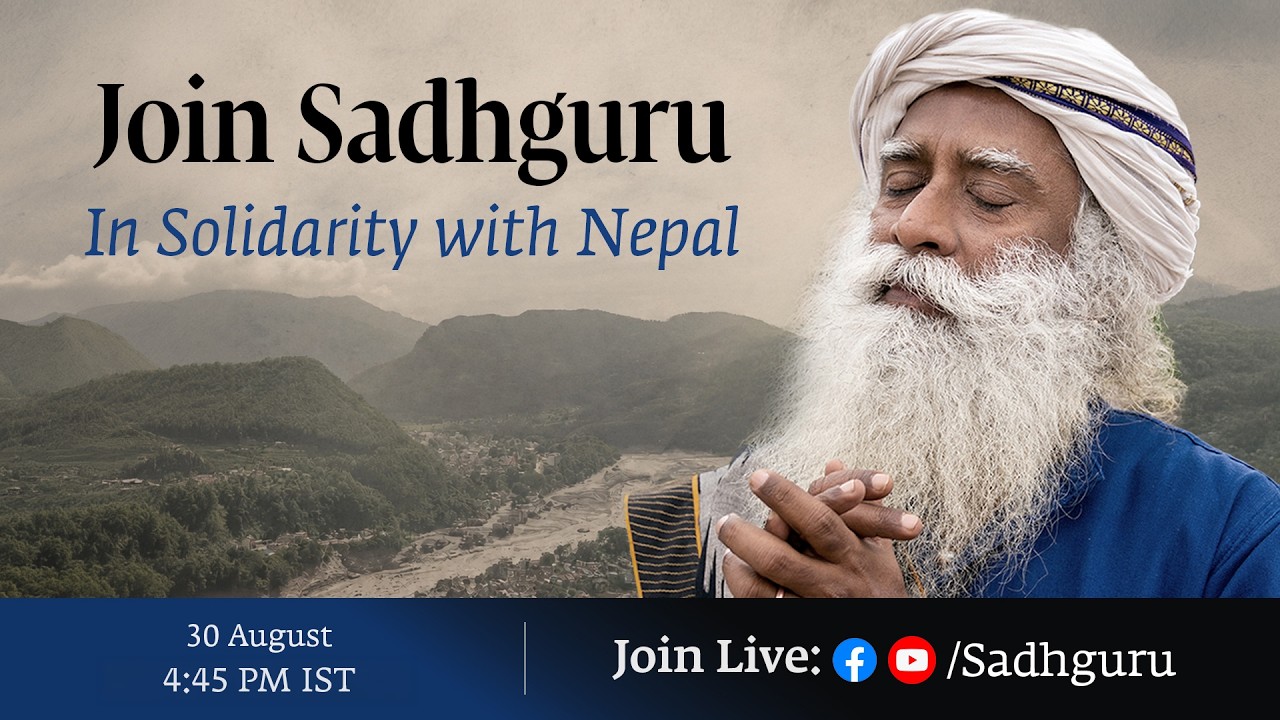
When Grief Becomes a Mirror: What the Nepal Floods Teach
Featured

When Grief Becomes a Mirror: What the Nepal Floods Teach

A flash flood on the Nepal-Tibet border devastated communities and claimed lives. This event became a moment to examine how we respond to tr…

1 min read
Mount Kailash's Hidden Dimensions: Mystical Phenomena Beyond Logic
Featured

Mount Kailash's Hidden Dimensions: Mystical Phenomena Beyond Logic

A 21-year pilgrimage reveals Mount Kailash and Lake Manasarovar as repositories of consciousness and extraordinary life forms defying conven…

1 min read
How Sitting Still Proves You're Already Awakening
Featured

How Sitting Still Proves You're Already Awakening

Most people can't sit quietly without discomfort, but if you can, you're already further along spiritually than you realize. Eckhart Tolle e…

1 min read
Shiva Shambho: How Sacred Sound Awakens Spiritual Devotion
Featured

Shiva Shambho: How Sacred Sound Awakens Spiritual Devotion

Radhika Das channels the transformative power of transcendental sound through a live kirtan performance, revealing how mantra purifies the h…

1 min read

Continue explorando

Continue sua jornada

Mais sabedoria e mais encontros de todo o diretório BrightStar.

Mais artigos

Explore a biblioteca completa de ensinamentos, entrevistas e guias.

Voltar a todos os artigos →

Professores e artistas

Conheça as linhagens, os músicos e os guias do mundo consciente.

Explorar artistas →

Encontre um evento

Kirtan, retiros, banhos de som, breathwork, festivais — acontecendo em breve.

Ver eventos →