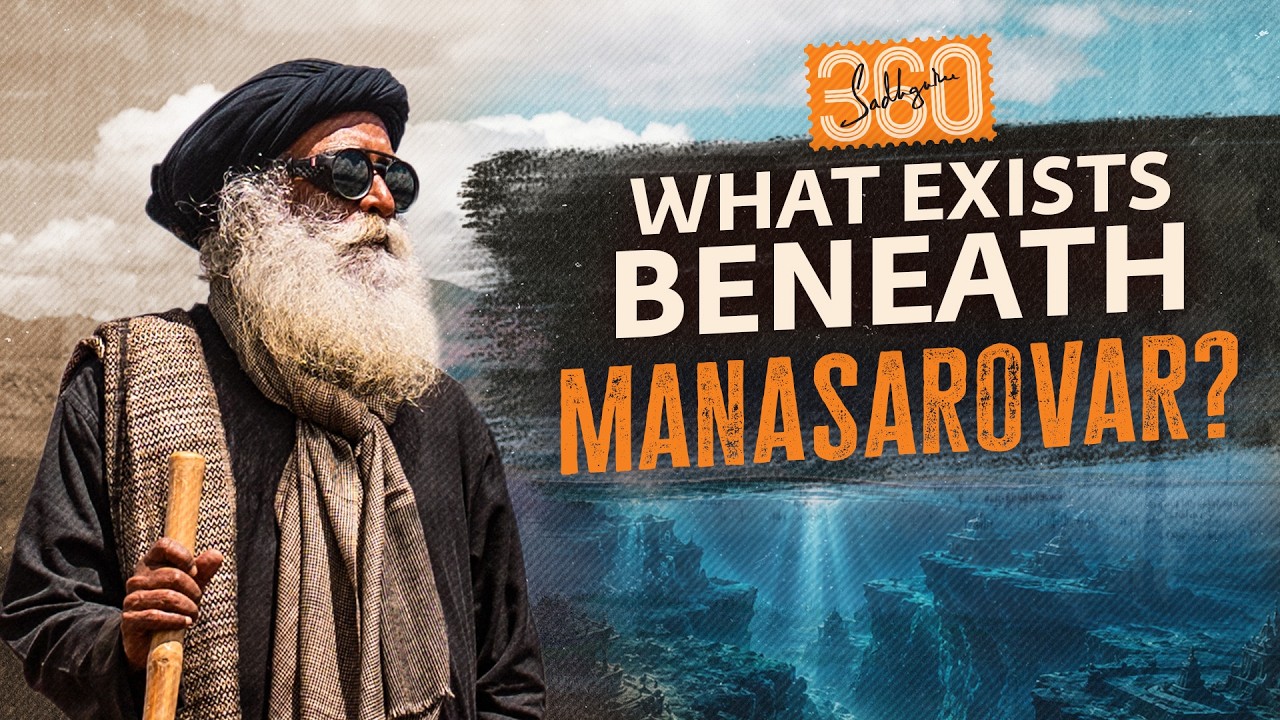
In this brief talk, Sadhguru recounts an adventurous youth encounter with a King Cobra in Mysuru, where his instinct was to catch the snake rather than flee. He uses this memory as a springboard to critique the modern generation's disconnection from nature and to articulate how direct exposure to natural environments—and to genuine risk and aliveness—profoundly reshapes human physiology, awareness, and sense of being. The anecdote illustrates a philosophy: that humans are designed to engage with the living world, not to retreat into controlled, domesticated spaces.
Why Sadhguru's Youth Was Defined by Direct Nature Engagement
Sadhguru frames his formative years in Mysuru as a period of genuine adventure. Rather than staying indoors or in structured environments, young Sadhguru spent considerable time outdoors, cultivating a quality of engagement with the natural world that many modern children never experience. When he encountered the King Cobra, his instinctive response was not fear but curiosity—and the impulse to catch it. This wasn't recklessness; it was the natural response of someone fully alive and present in their environment, without the layers of protective conditioning that keep modern humans physically and psychologically separated from nature.
This willingness to engage directly with potential danger reflects an orientation toward life itself. For Sadhguru, it was not about taking foolish risks but about being awake and responsive to one's surroundings. The cobra encounter became memorable not because it was unique, but because it epitomized a way of being: fully present, alert, and unafraid to encounter the unknown.
What Modern Disconnection from Nature Really Costs
Sadhguru emphasizes that the current generation's indifference to being outdoors represents a fundamental shift in how human beings exist. Unlike his youth, today's young people are heavily mediated by screens, indoor spaces, and controlled environments. This is not a nostalgic complaint; it is an observation about physiology and consciousness. When humans are indoors, isolated from weather, soil, plants, animals, and the unpredictability of living ecosystems, specific neurological and endocrine systems remain understimulated.
The human body evolved over millions of years in direct contact with nature. Our nervous system, our sensory apparatus, our immune system—all of these developed in environments of genuine variability, challenge, and engagement. Indoor environments are designed for comfort and predictability; they are, by design, deadening to the organism. Sadhguru's critique is that modern life—with its air conditioning, artificial lighting, and digital mediation—creates a kind of chronic sensory deprivation, even if the person feels busy or stimulated.
How Immersion in Nature Restructures Human Physiology and Awareness
When someone spends significant time in nature, a cascade of physiological changes occurs. The nervous system becomes more responsive and regulated. The breath deepens. The sensory organs sharpen. The body's ability to sense subtle shifts in temperature, light, humidity, and the presence of other living beings activates in ways that are impossible in a climate-controlled room. This is not poetic metaphor; it is measurable neurobiology.
Beyond physiology, something happens to one's sense of aliveness. In nature, there is constant novelty, constant micro-adjustments required. The mind cannot easily wander into abstraction or worry when the body is engaged with uneven terrain, changing weather, and the genuine presence of other life forms. Sadhguru's point is that this aliveness—this quality of being awake and present—is what humans are actually designed for. Modern comfort, by contrast, enables a kind of sleepwalking through life, where the body is present but consciousness is diminished.
The King Cobra as a Metaphor for Encountering the Alive
The cobra in Sadhguru's anecdote is not merely a dangerous animal; it is a representative of the living world in its full, undomesticated presence. The snake moves with intelligence and power. It is utterly indifferent to human convenience. It demands presence and respect. To encounter such a being—even to want to catch it—requires that one be alive in a particular way: alert, responsive, without excessive conceptual overlay about safety or liability.
Most modern humans will never encounter a cobra or any genuinely wild animal. But the principle holds for any immersion in unsanitized nature: forests, mountains, rivers, deserts. These environments do not adapt themselves to human comfort; the human must adapt. And in that adaptation, something in the human being reorganizes. The frontal lobes quiet. The sympathetic and parasympathetic nervous systems recalibrate. The immune system strengthens through exposure to biological diversity. Consciousness itself shifts from abstract and anxious toward embodied and present.
Why Nature Immersion Cannot Be Replaced by Virtual or Controlled Alternatives
In the modern era, there is often an attempt to simulate nature: nature documentaries, indoor gardens, virtual reality experiences. Sadhguru's implicit critique is that these are not substitutes. A nature documentary may inform the intellect, but it does not engage the nervous system in the same way that standing in a monsoon rainstorm does. An indoor garden is pleasant, but it does not expose the body to the variability, the genuine stakes, the aliveness of a wild ecosystem.
The reason is that the human organism responds not just to the conscious content of an experience but to the full sensory and physiological context. When you are in nature, your body knows, at a pre-conscious level, that you are in a living system with its own intelligence and power. Your behavior adjusts accordingly. Your vigilance adjusts. Your breathing adjusts. These adjustments are not available in mediated or controlled versions of nature.
What Happens to a Generation Raised Without Nature Immersion
Sadhguru's concern is not moralizing but pragmatic. A generation that grows up primarily indoors, in front of screens, in controlled environments, may develop competencies in certain domains—data processing, digital literacy. But they will lack the deep physiological reorganization that comes from genuine nature immersion. They may be more anxious, more prone to depression, more disconnected from their bodies. They may lack the felt sense of being alive that comes from direct encounter with the non-human world.
Moreover, they may lose the capacity to sense danger, to respond appropriately to risk, to exercise judgment in uncontrolled situations. Sadhguru's casual willingness to want to catch a cobra was not born from foolishness but from a lifetime of navigating genuine variability. In such a context, one develops an intuitive sense of what is manageable and what is not. A generation without such experience may be simultaneously more fearful (because the world outside is conceptually terrifying) and less capable (because the nervous system is underdeveloped).
Where to Go From Here
The practical implication of Sadhguru's anecdote is straightforward: spend time in nature, not as a leisure activity or wellness trend, but as a basic requirement for full human development. This need not be extreme or risky. A daily walk in an unmaintained park, time in a forest, swimming in a natural body of water, gardening in soil—these are sufficient. The key is regularity, duration, and a willingness to be present without the mediation of a screen or curated experience.
For those with children or mentoring responsibilities, the implication is that shielding young people entirely from risk, discomfort, and uncontrolled nature may produce a specific kind of dysfunction: competence in virtual domains, but aliveness deficit in embodied life. A balanced approach—one that honors genuine safety while permitting regular exposure to genuine, manageable risk in natural settings—may be more aligned with human development than the current trend toward maximum control and minimum exposure.